Ayurvedic Medicine: A Beginner's Guide to Ayurveda
 By Matthew Atkins · Updated
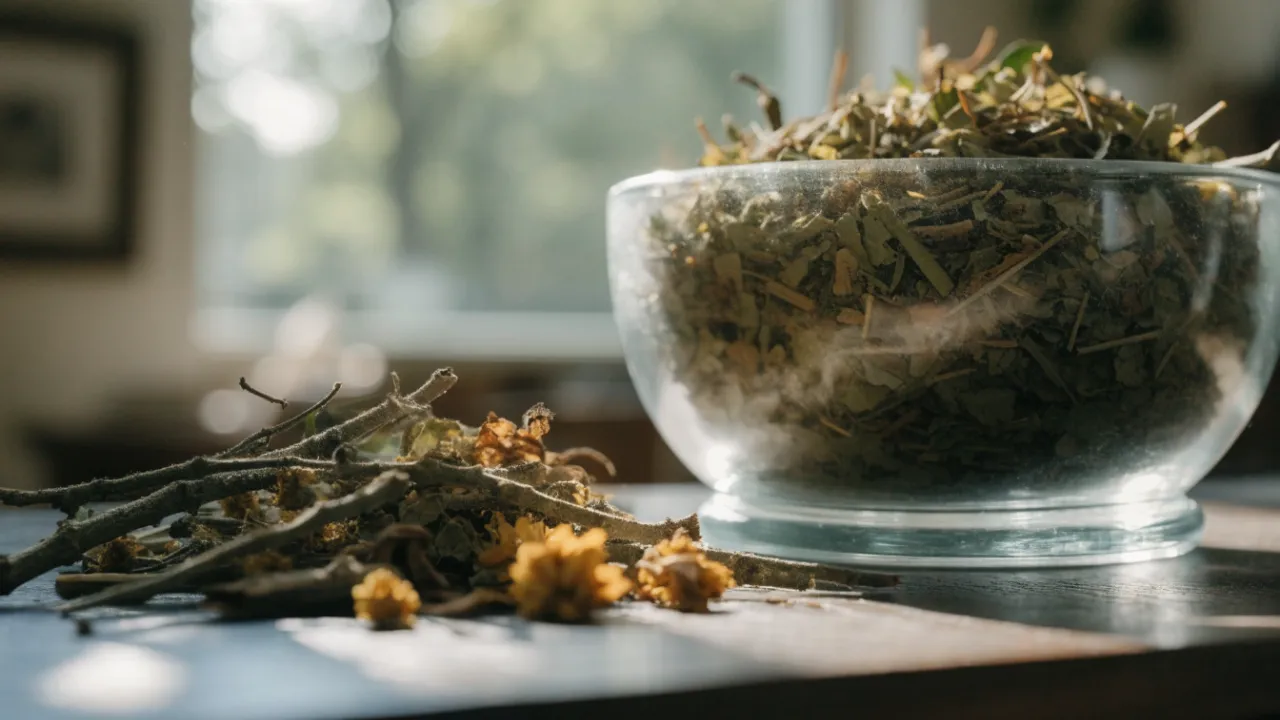
Ayurveda is a traditional system of medicine from India, more than 2,000 years old, that treats body, mind, and environment as connected. It describes each person in terms of three doshas (Vata, Pitta, and Kapha) and uses diet, daily routines, herbs, and cleansing practices to keep them in balance. Some Ayurvedic herbs, such as ashwagandha and turmeric, have promising clinical trials behind them, but the core concepts of Ayurveda are traditional ideas rather than scientifically established ones, and some Ayurvedic products have been found to contain lead, mercury, or arsenic. This guide explains how Ayurveda works and profiles seven common Ayurvedic herbs, each with an evidence rating, a typical dose, and key cautions.
Table of Contents
- What Is Ayurveda?
- Core Principles of Ayurveda
- The Three Doshas Explained
- Ayurvedic Daily and Seasonal Routines
- Ayurvedic Diet Basics
- Common Ayurvedic Herbs
- Mind-Body Practices in Ayurveda
- Ayurvedic Cleansing and Panchakarma
- Ayurveda Safety
- How to Start Using Ayurveda in Daily Life
- Frequently Asked Questions
- Sources
What Is Ayurveda?
Ayurveda is a traditional system of medicine that developed on the Indian subcontinent and is still widely practiced in South Asia and around the world. Its name comes from two Sanskrit words, ayus (life) and veda (knowledge), and is usually translated as “the science of life.” Ayurveda sees body, mind, and spirit as parts of one system and holds that health comes from balance between them and with the surrounding environment. It has its own extensive literature, diagnostic methods, and herbal tradition, and it emphasizes prevention and care tailored to the individual.
The Origins and History of Ayurveda
Ideas about health and healing appear in the Atharvaveda, one of the four Vedas, composed in the late second and early first millennium BCE. Over the following centuries, these scattered ideas were organized into a medical system.
The two foundational texts are the Charaka Samhita, attributed to the physician Charaka and focused on internal medicine, diagnosis, diet, and herbal remedies, and the Sushruta Samhita, attributed to the surgeon Sushruta and known for its descriptions of surgical instruments and procedures, including early reconstructive surgery and cataract surgery. Both were compiled over several centuries around the turn of the common era, drawing on older oral traditions.
Later scholars such as Vagbhata, author of the Ashtanga Hridaya, condensed this knowledge into practical clinical guides. Ayurveda influenced medicine in Tibet and Southeast Asia, survived suppression under colonial rule, and was revived in the twentieth century. Today, India regulates Ayurvedic education and practice through its Ministry of AYUSH.
What Modern Research Says About Ayurveda
Researchers have increasingly tested Ayurvedic herbs and practices with modern clinical trials. Much of this work focuses on herbs such as ashwagandha, which several small randomized trials found modestly reduced stress and anxiety scores compared with placebo, and turmeric, whose compound curcumin has been tested for knee osteoarthritis. Many of these trials are small and short, use different extracts and doses, and are sometimes funded by supplement makers.
Fenugreek, gymnema, and bitter melon have been studied for blood sugar and cholesterol, and some trials have tested whole Ayurvedic programs combining diet, yoga, and herbs. Results are mixed and hard to compare.
Overall, according to the US National Center for Complementary and Integrative Health, there are few well-designed studies of Ayurveda as a whole system, and most of its practices have not been rigorously tested (NCCIH). Ayurvedic diagnostic methods, such as determining a person’s dosha by pulse reading, have not been shown to be reliable in studies.
Core Principles of Ayurveda
Ayurveda sees health as a balance that is maintained through daily choices, with the body constantly adjusting to food, weather, season, activity, and emotion. It also holds that every person is different: the same food or remedy can affect two people in different ways depending on their constitution. Finally, it treats the human body as a small version of the natural world, so living in step with natural rhythms is considered central to preventing illness.
The concepts in this section are part of Ayurveda’s traditional framework. They describe patterns of symptoms and temperament in Ayurvedic terms, and they do not correspond to structures or substances identified by modern anatomy or physiology.
The Five Elements
Ayurveda teaches that the universe and the human body are made of five basic elements, the Panchamahabhuta:
- Space (akasha): Expansive and light; linked in Ayurveda with the body’s hollow spaces.
- Air (vayu): Mobile and dry; linked with breathing and movement.
- Fire (tejas): Hot and sharp; linked with digestion and body heat.
- Water (jala): Liquid and cool; linked with blood and other body fluids.
- Earth (prithvi): Heavy and stable; linked with bones and muscles.
In Ayurvedic theory, these elements combine to form the three doshas.
The Three Doshas
The three doshas, Vata, Pitta, and Kapha, are described in Ayurveda as functional energies, each made from two of the five elements:
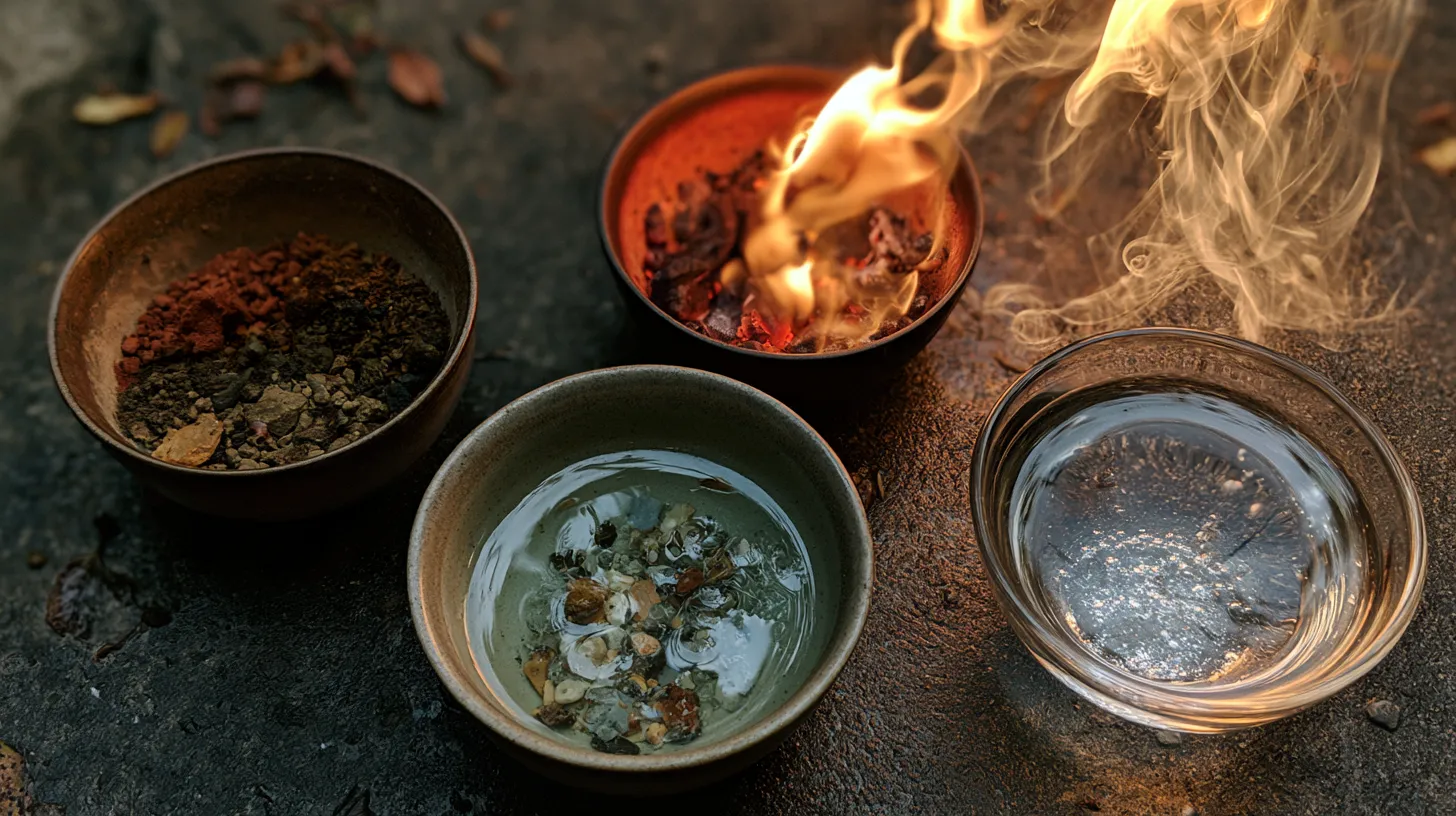
- Vata (space and air) is associated with movement: breathing, circulation, nerve signals, and elimination.
- Pitta (fire and water) is associated with digestion, metabolism, and transformation.
- Kapha (water and earth) is associated with structure, lubrication, and stability.
According to Ayurveda, each person is born with a particular mix of the three, called their Prakriti (constitution), which shapes their body type, digestion, and temperament. When the doshas stay close to that natural mix, a person is considered healthy; when they drift out of balance, illness is thought to follow.
Agni
Agni, usually translated as “digestive fire,” is the Ayurvedic concept of the metabolic force that breaks down food and turns it into nourishment. Ayurveda extends the idea to experiences and emotions, too: a strong agni is thought to help a person “digest” life events as well as meals.
Ayurveda teaches that irregular meals, stress, and emotional upset weaken agni. To keep it strong, it recommends regular mealtimes, warm and easily digested food, calming routines, and warming spices such as ginger, cumin, and black pepper, while going easy on cold, raw, or heavy food.
Ama
In Ayurveda, ama is described as a residue of incomplete digestion that forms when agni is weak. It is said to build up in the body’s channels (srotas), block them, and contribute to illness over time. Practitioners traditionally look for signs such as a thick coating on the tongue, heaviness or fogginess after meals, sluggish digestion, and stiffness.
Ama is a traditional concept, not a substance that has been identified or measured in the body. Symptoms such as ongoing fatigue, digestive problems, or joint stiffness have many possible medical causes and deserve a doctor’s evaluation rather than self-diagnosis.
The Three Doshas Explained
Ayurveda distinguishes a person’s lifelong constitution (Prakriti) from their current state of imbalance (Vikriti), which can be changed by diet, season, stress, or habits. Practitioners assess sleep, appetite, digestion, and mood alongside the pulse, tongue, and skin to decide which dosha is out of balance, then recommend diet, herbs, and routines to restore it.
Vata Dosha
Vata is described as light, dry, cold, rough, and mobile. In Ayurveda, it governs all movement in the body and mind and is considered the leader of the three doshas.
A person with balanced Vata is said to be energetic, creative, and quick-thinking. When Vata is out of balance, Ayurveda associates it with:
- Mental signs: Anxiety, restlessness, racing thoughts, insomnia, and scattered attention.
- Physical signs: Dry skin, constipation, cold hands and feet, irregular digestion, and sensitivity to cold.
To calm Vata, Ayurveda recommends warmth, nourishment, and routine: warm cooked food, healthy oils, regular meals, plenty of rest, and gentle practices such as slow yoga.
Pitta Dosha
Pitta is described as hot, sharp, light, and liquid. In Ayurveda, it governs digestion and all forms of transformation, from breaking down food to processing ideas.
Balanced Pitta is said to bring strong digestion, steady body temperature, and a sharp, decisive mind. When Pitta is out of balance, Ayurveda associates it with:
- Physical signs: Heartburn, loose stools, rashes, acne, feeling overheated, heavy sweating, and headaches when meals are skipped.
- Mental signs: Irritability, impatience, frustration, and difficulty switching off.
To calm Pitta, Ayurveda recommends cooling foods, adequate rest, avoiding too much heat, and pacing intense work.
Kapha Dosha
Kapha is described as heavy, cool, soft, slow, and stable. In Ayurveda, it governs growth, structure, lubrication, and immunity.
Balanced Kapha is said to bring calm endurance, a sturdy build, steady energy, and deep sleep. When Kapha is out of balance, Ayurveda associates it with:
- Physical signs: Lethargy, morning grogginess, sluggish digestion, weight gain, puffiness, congestion, and excess mucus.
- Emotional signs: Attachment, resistance to change, and low motivation.
To calm Kapha, Ayurveda recommends warmth, lightness, and activity in diet, herbs, and daily routine.
How to Find Your Dosha
Online questionnaires are the most common starting point. They ask about lifelong traits such as body frame, digestion, sleep, temperature preference, and temperament. Because it’s easy to confuse a temporary state with your lifelong constitution, practitioners often suggest answering once for your lifelong tendencies and once for how you feel now.
Ayurvedic practitioners also use pulse reading (Nadi Pariksha) and examine the tongue and eyes. Studies have found that different practitioners don’t always agree on a person’s dosha, so treat the result as a useful lens for thinking about your habits rather than a medical diagnosis.
Ayurvedic Daily and Seasonal Routines
Ayurveda holds that the body works best in step with natural cycles, and that regular habits adjusted to the time of day and season help prevent imbalance. Many of these routines, such as regular sleep, regular meals, and daily movement, overlap with ordinary healthy habits.
Dinacharya
Dinacharya, the Ayurvedic daily routine, includes:
- Waking early: Ideally before sunrise, when Ayurveda considers the mind clearest.
- Morning cleansing: Using the bathroom, then scraping the tongue with a stainless steel or copper scraper, which can reduce tongue coating and bad breath. Some people also practice oil pulling, swishing a spoonful of sesame or coconut oil in the mouth for 10–15 minutes. Evidence for oil pulling is limited, and the American Dental Association does not recommend it as a substitute for brushing and flossing.
- Self-massage and bathing: Warm oil massage (abhyanga), followed by a bath.
- Meals: Regular mealtimes, with the largest meal at midday and a light supper well before bed.
- Evening: A short walk, reading, or gentle stretching, with screens put away in the last hour before bed, and sleep by around 10 p.m.
Ritucharya
Ritucharya, or seasonal living, adjusts diet, exercise, and habits through the year. In Ayurvedic terms, summer’s heat tends to aggravate Pitta, autumn’s wind and dryness unsettle Vata, and winter’s cold and damp build Kapha:
- Summer: Cooling, hydrating foods such as fresh fruit, coconut, and lightly cooked vegetables, and gentler exercise in the cool of the morning.
- Autumn: Warm, grounding meals with healthy fats and cooked grains.
- Winter: Warming, slightly heavier foods and more vigorous exercise.
Abhyanga

Abhyanga is daily self-massage with warm oil before bathing. Ayurveda credits it with benefits for circulation, joints, skin, sleep, and the nervous system. Research on abhyanga itself is limited, but massage in general can ease muscle tension and help people relax, and oil can soften dry skin.
Oils are traditionally matched to the dosha, with sesame oil as a common default:
- Vata: Warming oils such as sesame or almond.
- Pitta: Cooling oils such as coconut or sunflower.
- Kapha: Lighter oils, or a small amount of sesame.
To practice, warm the bottle in a bowl of hot water and test the oil on your inner wrist. Massage the scalp in small circles, then use long strokes on the arms and legs, circles over the joints, and gentle clockwise circles on the abdomen. Let the oil sit for 5–15 minutes, then bathe. Patch-test any new oil first, avoid mustard oil on sensitive skin, and be careful on oily bathroom floors.
Ayurvedic Diet Basics
Ayurvedic eating emphasizes fresh, seasonal, minimally processed food (grains, legumes, vegetables, fruit, dairy, and spices), cooked close to mealtime. Stale and heavily processed foods are discouraged, and steaming, sautéing in ghee or oil, and simmering with spices are preferred.
Ayurveda also stresses how you eat: in a calm setting without screens, chewing well, stopping when about two-thirds full, and leaving a few hours between meals. These habits overlap with modern advice on mindful eating.
Ayurveda also teaches that some food combinations (viruddha ahara) are incompatible and disturb digestion. Traditional examples include milk with sour fruit, fish with dairy, and melon with other foods. These rules come from tradition rather than research.
Eating for Your Dosha
Ayurveda recommends different foods depending on which dosha is dominant or out of balance:
- Vata: Warm, moist, grounding foods such as cooked rice and oats, stewed fruit, root vegetables, ghee, and warming spices like ginger and cinnamon. Fewer raw salads, cold drinks, and dried fruit.
- Pitta: Cooling foods such as sweet fruit, cucumber, leafy greens, coconut, barley, and basmati rice. Less spicy, fried, sour, and fermented food, and less alcohol.
- Kapha: Light, warm foods such as legumes, vegetables, modest portions of whole grains, and pungent spices like black pepper, turmeric, and cumin. Less heavy dairy, fried food, and sweets.
Dosha-based diets have not been well tested in clinical trials. If you have a medical condition such as diabetes, kidney disease, or a food allergy, follow your doctor’s dietary advice first.
The Six Tastes
Ayurveda identifies six tastes (Shad Rasa), each with qualities it believes affect the doshas:
- Sweet, sour, and salty: Considered grounding and nourishing. In excess, they are said to cause heaviness.
- Pungent, bitter, and astringent: Considered lighter and drying. In excess, they are said to cause dryness and restlessness.
The traditional advice is to include all six tastes in each main meal, for example a grain, vegetables, a protein, a little oil, a squeeze of lemon, and fresh herbs. That naturally encourages a varied plate.
Common Ayurvedic Cooking Spices
Cumin, coriander, fennel, and ginger are a foundational group in Ayurvedic cooking:
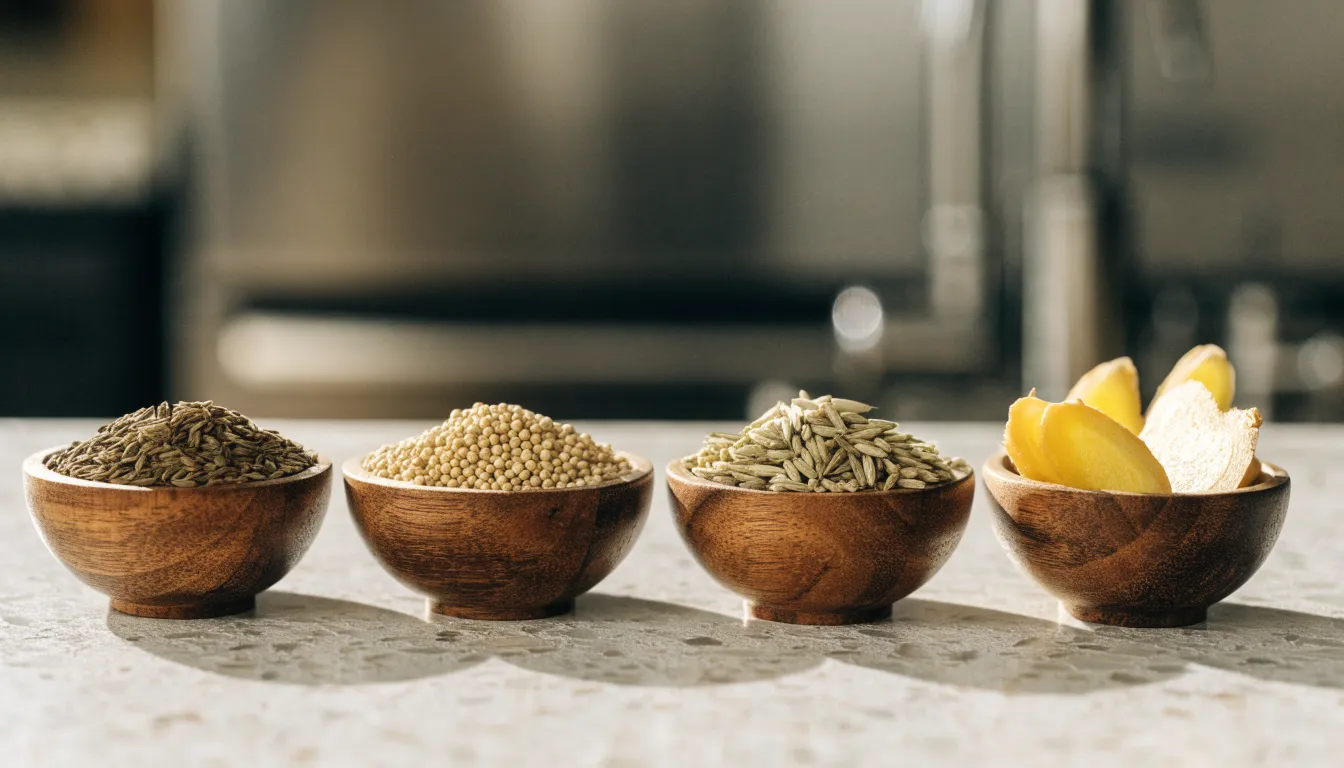
- Cumin: Traditionally used to aid digestion and ease bloating. The seeds are usually toasted in hot ghee or oil at the start of cooking.
- Coriander: Considered cooling in Ayurveda, it balances hotter spices and pairs with cumin in dals, vegetables, and rice.
- Fennel: Sweet and cooling, traditionally used to settle the stomach and often chewed after meals to freshen breath.
- Ginger: Fresh ginger is warming and is taken as tea to aid digestion. It is the one spice here with good clinical evidence, for easing nausea. Dried ginger is considered even more warming.
A simple after-meal tea of equal parts cumin, coriander, and fennel seeds is a traditional digestive aid.
Common Ayurvedic Herbs
Ayurvedic herbal medicine draws on hundreds of plants, usually combined into formulas. Many of the best-known herbs are classed as rasayanas, rejuvenating tonics traditionally taken to support vitality, resilience, and longevity.
How We Rate the Evidence
- Strong: Several well-designed randomized trials in people with consistent, replicated results. None of the herbs on this page reaches this level.
- Moderate: Some good-quality human trials with mostly positive results, but small, short, or not well replicated.
- Limited: A few small or mixed human studies, or mainly laboratory and animal research.
- Traditional: Long historical use with little or no clinical testing.
Doses are typical adult ranges from studies or standardized products. Your product’s label takes priority, and you should check with a doctor or pharmacist before starting any herb if you take medication.
Ashwagandha
Ashwagandha (Withania somnifera) is one of Ayurveda’s best-known rasayanas, traditionally used for strength, vitality, and sleep. It is the most studied of the herbs often called adaptogens. Several small randomized trials, most lasting about eight weeks, found that standardized root extract reduced stress and anxiety scores and lowered cortisol compared with placebo, and some reported better sleep (NCCIH). Evidence for strength and athletic performance comes from a few small trials. It is traditionally taken as a powder in warm milk or water, or as capsules.
Evidence: Moderate (stress, anxiety, and sleep) · Typical adult dose: 300–600 mg/day of standardized root extract · Cautions: Rare but serious cases of liver injury have been reported; stop and see a doctor if you notice dark urine, yellowing skin or eyes, or abdominal pain. Can raise thyroid hormone levels, so avoid with hyperthyroidism and talk to a doctor if you take thyroid medication. Can cause drowsiness and add to sedatives. May interfere with immunosuppressants. Avoid in pregnancy.
Turmeric
Turmeric (Curcuma longa) is traditionally used in Ayurveda for digestion, joint swelling, skin problems, and coughs. Its main active compound, curcumin, affects several inflammation pathways in laboratory studies.
In people, the best evidence is for knee osteoarthritis: some small trials found that curcumin extracts reduced pain, and a few found relief similar to ibuprofen, but the studies are short and of mixed quality (NCCIH). Curcumin is poorly absorbed on its own, so supplements often add piperine (black pepper extract) or use special formulas to increase absorption. Piperine also increases the absorption of many prescription drugs, and high-absorption turmeric products have been linked to liver injury.
Evidence: Moderate (knee osteoarthritis) · Typical adult dose: 500 mg curcumin extract twice daily; culinary turmeric in food is a separate matter and generally safe · Cautions: Liver injury has been reported, especially with high-absorption and piperine-containing products (LiverTox). Avoid with gallstones, bile duct problems, or liver disease. May increase bleeding risk with blood thinners; stop two weeks before surgery. Piperine can change blood levels of other medications. Avoid supplement doses in pregnancy.
Holy Basil (Tulsi)
Tulsi (Ocimum tenuiflorum, also called Ocimum sanctum) is a sacred plant in Hindu tradition and one of Ayurveda’s most common herbs. It is traditionally taken as a daily tea for coughs and congestion, stress, and mental clarity. You can read more in our guide to holy basil. A handful of small human studies reported reduced stress and anxiety symptoms, and a few small trials found modest drops in blood sugar in people with type 2 diabetes.
Evidence: Limited · Typical adult dose: 300–600 mg/day of leaf extract, or 1–2 cups of tulsi tea · Cautions: May lower blood sugar and slow blood clotting, so use caution with diabetes drugs and blood thinners, and stop two weeks before surgery. Animal studies suggest it may affect fertility, so avoid if pregnant or trying to conceive.
Triphala
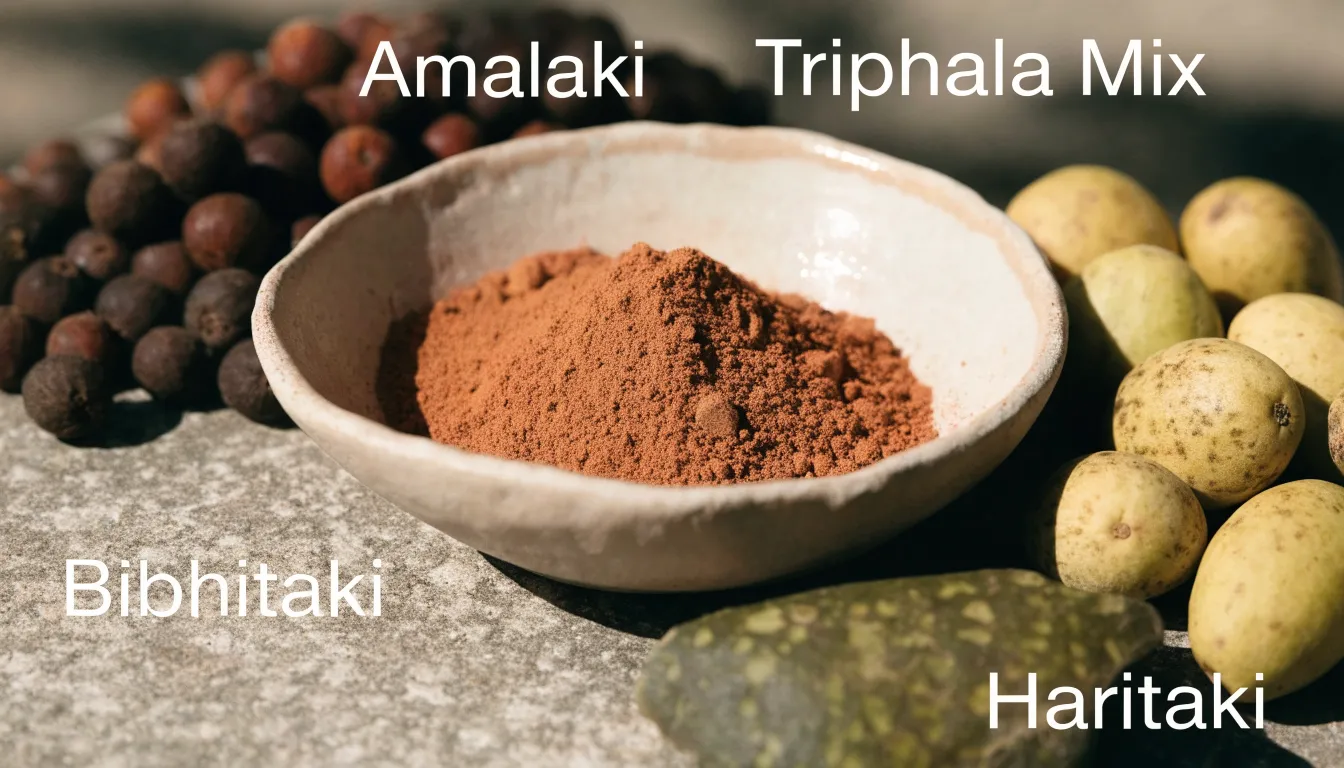
Triphala (“three fruits”) combines dried amalaki (amla, or Indian gooseberry), bibhitaki, and haritaki. It is one of the most widely used Ayurvedic formulas, traditionally taken in the evening as a gentle bowel tonic for constipation and as a rasayana. A few small trials suggest it can ease constipation, but there is little other human research.
Evidence: Limited · Typical adult dose: 1–3 g of powder, or tablets per label, at bedtime · Cautions: Can cause diarrhea, cramping, and gas, especially at higher doses. May lower blood sugar and interact with some medications. Avoid in pregnancy and breastfeeding. See a doctor for constipation that is new, severe, or lasts more than a few weeks.
Amla
Amla (Phyllanthus emblica, also called Emblica officinalis or Indian gooseberry) is an ingredient in both triphala and the traditional herbal jam chyawanprash. The fresh fruit is very high in vitamin C, although drying and processing reduce it, and it contains polyphenols such as gallic acid and ellagic acid. Small trials have studied amla for cholesterol and blood sugar with some positive results, but the evidence is limited. It is eaten fresh, juiced, powdered, or as a preserve (amla murabba).
Evidence: Limited · Typical adult dose: 500–1,000 mg/day of fruit extract, or fresh fruit in food amounts · Cautions: May lower blood sugar and slow blood clotting, so use caution with diabetes drugs and blood thinners. Can upset the stomach in large amounts. Avoid supplement doses in pregnancy.
Brahmi (Bacopa)
Brahmi (Bacopa monnieri) is a traditional Ayurvedic brain tonic. Several randomized trials in healthy adults found modest improvements in memory and learning speed after 8–12 weeks of daily use. Effects build slowly over weeks rather than appearing right away.
Evidence: Moderate (memory) · Typical adult dose: 300 mg/day of extract standardized to 50–55% bacosides, taken with food · Cautions: Common side effects are nausea, cramping, and loose stools. May slow heart rate. May interact with thyroid medication and drugs broken down by the liver. Not studied in pregnancy.
Shatavari
Shatavari (Asparagus racemosus) is a cooling, sweet rasayana traditionally associated with women’s health. It has long been used to support breast milk supply, ease menstrual problems, and nourish the body during menopause, and also to soothe an irritated stomach. Human research is very limited, and small trials on breast milk supply have produced mixed results.
Evidence: Traditional · Typical adult dose: 500–1,000 mg/day of root extract, or powder per label · Cautions: Avoid if allergic to asparagus. May have mild estrogen-like effects, so people with hormone-sensitive conditions such as breast cancer should talk to a doctor first. May lower blood sugar and act as a mild diuretic. Not well studied in pregnancy or breastfeeding, so check with your provider before using it to increase milk supply.
Another rasayana, guduchi (Tinospora cordifolia, also called giloy), is widely sold for immunity. Since 2021, doctors in India have reported cases of liver injury, including autoimmune-like hepatitis, in people taking guduchi. Avoid it if you have liver disease or an autoimmune condition, and stop it immediately if you develop signs of liver problems.
Ayurvedic Herbs Compared
| Herb | Traditional use | Evidence | Key caution |
|---|---|---|---|
| Ashwagandha | Stress, sleep, strength | Moderate | Liver injury; thyroid; avoid in pregnancy |
| Turmeric | Joints, digestion, skin | Moderate (knee osteoarthritis) | Liver injury; blood thinners; gallstones |
| Holy basil (tulsi) | Stress, coughs | Limited | Blood sugar; blood thinners; fertility |
| Triphala | Constipation, general tonic | Limited | Diarrhea; avoid in pregnancy |
| Amla | Immunity, cholesterol | Limited | Blood sugar; blood thinners |
| Brahmi (bacopa) | Memory, focus | Moderate | Stomach upset; slower heart rate |
| Shatavari | Women’s health, breast milk | Traditional | Asparagus allergy; hormone-sensitive conditions |
Mind-Body Practices in Ayurveda
Ayurveda treats mental, emotional, and physical health as one system, and it uses movement, meditation, and breathing practices daily to keep them in balance.
Yoga
In Ayurveda, yoga postures (asanas) are adapted to a person’s dosha:
- Vata: Slow, grounding poses held steadily to calm restlessness.
- Pitta: Moderate, cooling sequences with forward folds and relaxed breathing.
- Kapha: More vigorous, flowing sequences that build warmth and energy.
Yoga in general has reasonable evidence for easing low back pain and improving flexibility, balance, and stress levels, regardless of dosha.
Meditation and Breathwork
Pranayama, or breath control, is used in Ayurveda to calm the mind and balance the doshas:
- Nadi Shodhana (alternate nostril breathing): Traditionally used to settle scattered thoughts.
- Bhramari (humming bee breath): Used to soothe an agitated mind.
- Long, slow exhales: Help shift the body into a calmer, “rest and digest” state.
Meditation and slow breathing have reasonable evidence for reducing stress and anxiety. Combined with mindfulness, mantra, or guided visualization, they are among the lowest-risk parts of Ayurvedic practice.
Ayurvedic Cleansing and Panchakarma

Panchakarma (“five actions”) is Ayurveda’s intensive cleansing program, traditionally intended to clear ama and restore balance between the doshas. It has three phases:
- Purvakarma (preparation): Taking medicated ghee or oil, oil massage, and herbal steam.
- Pradhanakarma (main treatment): A selection of five classical procedures: induced vomiting (vamana), induced diarrhea (virechana), medicated enemas (basti), nasal oil treatments (nasya), and bloodletting (rakta moksha).
- Paschatkarma (recovery): Gradually reintroducing food, plus herbs and lifestyle advice.
There is little rigorous research on panchakarma. The procedures can cause real harm: induced vomiting, purging, and enemas can lead to dehydration and dangerous electrolyte imbalances, and bloodletting carries risks of infection and blood loss. Panchakarma is not suitable during pregnancy, for children or older adults, or for anyone with heart, kidney, or other chronic conditions. Anyone considering it should talk to their doctor first and only use a clinic with qualified, medically supervised staff.
Ayurveda Safety
Ayurvedic products and practices carry real risks, particularly from contaminated products, herb-drug interactions, and self-prescribing. In the United States, Ayurvedic products are sold as dietary supplements, which are not tested or approved by the FDA before sale.
Heavy Metals in Ayurvedic Products
A 2008 study published in JAMA tested Ayurvedic products bought online and found lead, mercury, or arsenic in about one in five of them. Contamination was more common in rasa shastra products, which traditionally combine herbs with metals, minerals, or gems on purpose. Practitioners say traditional processing makes these metals safe, but that has not been shown. Cases of lead poisoning linked to Ayurvedic products have been reported in the US, including in pregnant women and children.
Heavy metals can cause serious damage to the brain, nerves, kidneys, and a developing baby. To reduce the risk:
- Choose products tested by an independent organization such as USP or NSF.
- Ask the manufacturer for a Certificate of Analysis (COA) showing heavy-metal test results.
- Avoid rasa shastra products and those whose labels list metals or minerals (bhasma).
- Buy from established brands with clear labeling, and be cautious with imported products sold online.
If you have taken Ayurvedic products and have symptoms such as fatigue, abdominal pain, or tingling in the hands or feet, ask your doctor about a blood lead test.
Herb and Drug Interactions
Talk to a doctor or pharmacist before combining Ayurvedic herbs with:
- Blood thinners (such as warfarin): Turmeric, holy basil, amla, ginger, and guggul may increase bleeding risk.
- Diabetes medications: Holy basil, amla, triphala, fenugreek, gymnema, and bitter melon can add to their effect and cause low blood sugar.
- Thyroid medication: Ashwagandha can raise thyroid hormone levels, and guggul and brahmi may also affect thyroid function or medication.
- Sedatives and sleep aids: Ashwagandha can add to their effect.
- Immunosuppressants: Ashwagandha and guduchi may interfere with them.
- Many prescription drugs: Piperine, often added to turmeric supplements, can raise blood levels of many medications. Guggul may lower levels of some heart drugs, such as propranolol and diltiazem.
Formulas vary from batch to batch, so tell every doctor and pharmacist you see about all the supplements you take, and never change a prescribed dose without medical advice.
Pregnancy, Breastfeeding and Children
Avoid Ayurvedic herbal supplements during pregnancy and breastfeeding unless your doctor or midwife specifically approves one. Ashwagandha, triphala, and supplement doses of turmeric are among those to avoid, and the risk of heavy-metal contamination is especially serious for a developing baby. Never give adult herbal products to children.
How to Find a Qualified Ayurvedic Practitioner
In India, Ayurvedic doctors complete a five-and-a-half-year degree (BAMS) and are registered with government medical boards. In the United States, Ayurveda is not a licensed medical profession, so practitioners’ training varies widely. The National Ayurvedic Medical Association (NAMA) recognizes several levels of training, from Ayurvedic Health Counselor to Ayurvedic Practitioner and Ayurvedic Doctor, ranging from several hundred to several thousand hours. Check which level a practitioner holds and where they trained.
A responsible practitioner will:
- Take a full history, including your medications and medical conditions.
- Tell you exactly what is in any herbs or formulas they recommend, and show you contamination test results.
- Work alongside your doctor rather than replacing them.
Avoid anyone who promises cures, recommends stopping prescribed treatment, or sells unlabeled or metal-containing preparations.
How to Start Using Ayurveda in Daily Life
The lowest-risk parts of Ayurveda are its lifestyle habits. Start with one or two and build from there:
- Eat warm, regular meals: Cook fresh food when you can, eat at regular times, make lunch a substantial meal, and season with ginger, cumin, and other spices.
- Try a short morning routine: Scrape your tongue, do a 5-minute warm oil massage before showering, and stretch for a few minutes.
- Keep a steady sleep schedule: Aim to go to bed and wake at the same times every day.
- Add breathing or meditation: Even 5–10 minutes of slow breathing a day can help with stress.
Talk to your doctor before adding Ayurvedic herbs, especially if you take medication or have a medical condition.
Frequently Asked Questions
What is Ayurveda and where did it come from?
Ayurveda is a traditional system of medicine from the Indian subcontinent, with roots more than 2,000 years old. It views body, mind, and environment as connected and emphasizes prevention, diet, daily routines, and herbs tailored to each person.
What are Vata, Pitta, and Kapha?
They are the three doshas, Ayurveda’s way of describing a person’s constitution. Vata is associated with movement, Pitta with digestion and metabolism, and Kapha with structure and stability. In Ayurveda, health means keeping them in balance. The doshas are traditional concepts rather than measurable parts of the body.
Does Ayurveda actually work?
Some Ayurvedic herbs have promising evidence for specific uses, such as ashwagandha for stress and curcumin for knee osteoarthritis, and its lifestyle habits overlap with standard health advice. But there are few rigorous studies of Ayurveda as a whole system, and its diagnostic methods have not been shown to be reliable.
Is Ayurveda safe?
Ayurvedic lifestyle practices such as regular meals, sleep, yoga, and meditation are generally safe. Herbal products carry more risk: some have been found to contain lead, mercury, or arsenic, several herbs can cause liver injury or interact with medications, and intensive cleansing such as panchakarma can cause harm. Buy tested products, tell your doctor everything you take, and avoid herbal supplements in pregnancy and for children.
What is ashwagandha used for in Ayurveda?
Ashwagandha is a traditional rasayana, or rejuvenating tonic, used for stress, sleep, and strength. Several small trials found it reduced stress and anxiety and improved sleep. It can cause rare liver injury, can raise thyroid hormone levels, and should be avoided in pregnancy.
What is dinacharya?
Dinacharya is the Ayurvedic daily routine. It includes waking early, tongue scraping, warm oil self-massage, regular meals with the largest at midday, a light supper, and going to bed around 10 p.m.
What are the six tastes in an Ayurvedic diet?
Sweet, sour, salty, pungent, bitter, and astringent. Ayurveda recommends including all six in each main meal, which naturally leads to a varied plate.
Can I combine Ayurveda with conventional medicine?
Yes, but tell your doctor and pharmacist about any Ayurvedic herbs you take so they can check for interactions, and don’t stop or change prescribed treatment without medical advice.
How long does it take to see results?
Lifestyle changes and herbs such as ashwagandha and brahmi generally take several weeks to show any effect. If symptoms aren’t improving, or are getting worse, see a doctor.
Sources
- National Center for Complementary and Integrative Health (NCCIH): Ayurvedic Medicine: In Depth, Ashwagandha, Turmeric.
- Saper RB, et al. Lead, mercury, and arsenic in US- and Indian-manufactured Ayurvedic medicines sold via the Internet. JAMA, 2008.
- NIH LiverTox database on herbal and dietary supplement liver injury: LiverTox.
Matthew Atkins
Matthew studied biology and has worked in conservation. He's been interested in medicinal herbs for many years. More about HerbsList
This page is for general information only and isn't medical advice. Talk with a doctor or pharmacist before taking any herb or supplement. Full disclaimer