Chamomile: Benefits, Uses and How to Make the Tea
 By Matthew Atkins · Updated

Chamomile is a daisy-like flowering herb whose dried flowers are brewed as tea and used in extracts, capsules, and skin preparations. It is one of the most popular herbal teas in the world, usually drunk to relax, unwind before bed, or settle the stomach. The research behind it is modest: a few small trials suggest chamomile extract may ease mild generalized anxiety, but there is very little evidence that it helps insomnia, and most of its other uses rest on tradition and laboratory studies. It is generally safe as a tea, but it can cause allergic reactions in people sensitive to ragweed and related plants. This guide covers what the evidence shows, how to make chamomile tea, and how to use it safely.
Table of Contents
What Is Chamomile?
Chamomile is a flowering herb in the Asteraceae family, the same plant family as daisies, sunflowers, and ragweed. Its small flowers, with white petals around a yellow center, are dried for teas, tinctures, capsules, essential oils, and skin products. Chamomile is cheap, widely grown, and mild-tasting, and it is one of the most widely consumed herbal products in the world.
German vs. Roman Chamomile
German chamomile (Matricaria chamomilla, also called Matricaria recutita) and Roman or English chamomile (Chamaemelum nobile) are two different species that share a common name.
German chamomile is an upright annual that grows to about 60 centimeters (2 feet) tall, with hollow, cone-shaped yellow centers. It grows in fields and disturbed ground across Europe and western Asia. Roman chamomile is a low-growing perennial, often used as ground cover, that rarely grows taller than a foot, with solid, dome-shaped centers. It is native to western Europe.
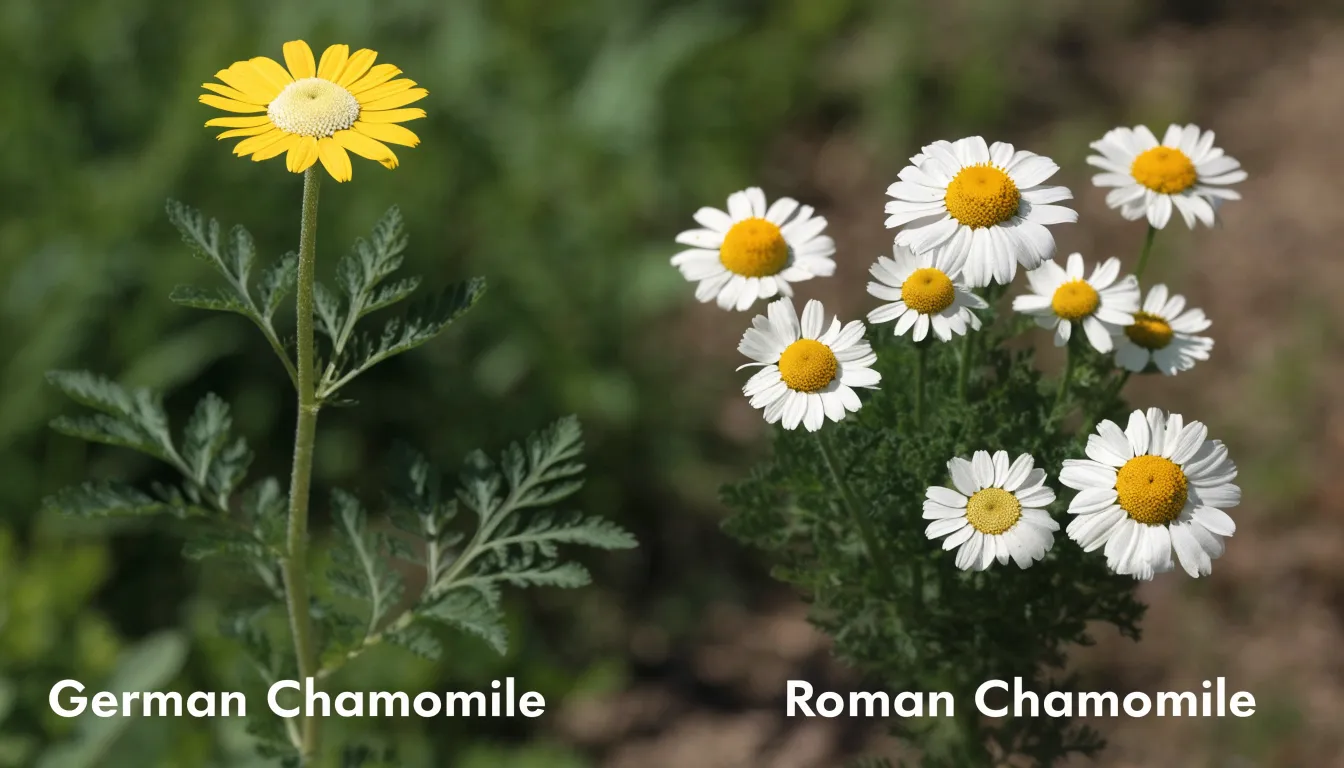
They also differ in taste and chemistry:
- German chamomile is sweeter, with an apple-like flavor. Its essential oil contains alpha-bisabolol and chamazulene, a compound that turns the oil deep blue during steam distillation. It is the species used in most teas and in nearly all clinical research.
- Roman chamomile is more bitter and herbal. Its oil contains different compounds, mainly esters such as isobutyl angelate, and it is used mostly in aromatherapy and cosmetics.
Check the Latin name on the label to know which one you are buying. When this guide refers to research, it means German chamomile.
Apigenin and Other Active Compounds
Chamomile’s calming reputation is usually credited to apigenin, a flavonoid found in the dried flowers. In laboratory studies, apigenin binds weakly to the same brain receptors (GABA-A receptors) that anti-anxiety drugs such as benzodiazepines act on. How much apigenin from a cup of tea actually reaches the brain, and whether that is enough to have an effect, is not known.
Chamomile’s essential oil also contains bisabolol and chamazulene, which have shown anti-inflammatory and muscle-relaxing effects in laboratory studies. Chamazulene forms during steam distillation, so it is present in the essential oil but not in tea.
A Brief History of Chamomile
Chamomile has been used for thousands of years in ancient Egypt, Greece, and Rome, and in medieval Europe. Ancient Egyptians are said to have associated it with the sun god Ra. Greek physicians, including Hippocrates and later Galen, prescribed it for fevers, digestive problems, and inflammation. Its name comes from the Greek chamaimēlon, meaning “earth apple,” for the scent of its flowers.
In medieval Europe, chamomile was grown in monastery gardens and used as tea, in poultices, and in remedies for digestive upset and skin conditions. It has remained a common household remedy ever since.
Chamomile Benefits: What the Research Shows
Chamomile is well tolerated, but the clinical research behind it is thinner than its reputation suggests. Most trials are small and short, many test extracts rather than tea, and several popular uses rely mainly on laboratory studies or tradition (NCCIH). The sections below are ordered from the strongest evidence to the weakest.
How We Rate the Evidence
- Strong: Several well-designed randomized trials in people with consistent, replicated results. None of chamomile’s uses reaches this level.
- Moderate: Some good-quality human trials with mostly positive results, but small, short, or not well replicated.
- Limited: A few small or mixed human studies, or mainly laboratory and animal research.
- Traditional: Long historical use with little or no clinical testing.
Anxiety
Anxiety is the use with the best evidence. A few small, placebo-controlled trials in people with mild to moderate generalized anxiety disorder (GAD) found that standardized chamomile extract capsules, taken for about eight weeks, reduced anxiety scores somewhat more than placebo. A later trial tested whether staying on chamomile long-term prevented symptoms from returning and found no clear difference from placebo. These trials used concentrated extracts, not tea.
Evidence: Limited (mild generalized anxiety)
Chamomile is not a treatment for anxiety disorders. If anxiety interferes with your daily life, talk to a doctor or mental health professional.
Sleep
Chamomile tea is a classic bedtime drink, but there is very little research on whether it helps people sleep. The one small trial in adults with chronic insomnia found no meaningful improvement in sleep compared with placebo (NCCIH). A few small studies in older adults and new mothers reported modest improvements in how well people felt they slept, but none of these were in people with insomnia.
A warm, caffeine-free drink can still be a pleasant part of a wind-down routine. Just don’t expect chamomile to work like a sleep medication.
Evidence: Limited (no clear benefit for insomnia)
Ongoing trouble sleeping can be a sign of sleep apnea, depression, anxiety, or other conditions worth discussing with a doctor.
Digestion, Bloating and Upset Stomach
Chamomile is traditionally sipped after meals for indigestion, gas, and a churning stomach, and its compounds relax smooth muscle in laboratory studies. Most of the clinical evidence comes from multi-herb products that contain chamomile alongside other herbs, so it is hard to know how much chamomile itself contributes. See also our guide to herbs for acid reflux.
Evidence: Traditional (alone); Limited (as part of multi-herb products)
Persistent or severe digestive symptoms, heartburn more than twice a week, or unexplained weight loss should be checked by a doctor.
Menstrual Cramps and PMS
A few small clinical trials, mostly from Iran, found that chamomile tea or extract reduced period pain, and some reported less need for pain relievers. A few small trials also found that chamomile extract improved PMS-related mood symptoms compared with placebo. The studies are small and of mixed quality.
Evidence: Limited
Severe period pain, or pain that is getting worse, can be a sign of endometriosis or other conditions and should be checked by a doctor.
Skin Irritation (Topical Use)
Chamomile creams and compresses are traditionally used for minor skin irritation, rashes, and mild eczema. One older trial found a chamomile cream worked about as well as a low-strength hydrocortisone cream for eczema, but the overall evidence is limited.
Chamomile is also a known cause of allergic contact dermatitis, especially in people sensitive to ragweed and related plants. Patch-test any chamomile product on a small area of skin first, and see a doctor for infected, spreading, or persistent skin problems.
Evidence: Limited
Blood Sugar
In laboratory and animal studies, chamomile extracts slow the enzymes that break down carbohydrates and improve markers of insulin sensitivity. A small trial in people with type 2 diabetes found that drinking chamomile tea after meals for several weeks modestly lowered some blood sugar measures. There is not enough evidence to use chamomile to manage diabetes.
Evidence: Limited
Other Claimed Benefits
- Cancer: Laboratory studies show apigenin can slow cancer cell growth, but there is no evidence that chamomile prevents or treats cancer in people.
- Heart health: A few small studies have looked at blood pressure, cholesterol, or inflammation, with inconsistent results.
- Bone health: Only laboratory and very early research exists.
Evidence: Limited (laboratory research only for cancer and bone health)
Benefits at a Glance
| Use | Evidence | Notes |
|---|---|---|
| Mild generalized anxiety | Limited | A few small trials of standardized extract, not tea |
| Sleep | Limited | One insomnia trial found no benefit |
| Digestion | Traditional | Clinical data mostly from multi-herb products |
| Menstrual cramps and PMS | Limited | Small trials of mixed quality |
| Skin irritation | Limited | Can itself cause allergic skin reactions |
| Blood sugar | Limited | One small human trial |
| Cancer, heart, bone | Limited | Mostly laboratory research |
How to Make Chamomile Tea
Good chamomile tea starts with fresh, aromatic flowers and water that’s hot but not boiling. Look for intact yellow-and-white flower heads with a fresh, apple-like smell.
Loose Flowers vs. Tea Bags
Whole dried flowers keep their aroma longer than the finely cut flowers in standard tea bags, which have more surface area exposed to air. Loose flowers also let you adjust the strength, while standard tea bags hold a fixed, fairly small amount. Pyramid bags with whole flowers are a good middle ground.
For the best flavor, use dried chamomile within 6 to 12 months of purchase and store it in an airtight container away from light and heat.
Step-by-Step Chamomile Tea Recipe
- Measure the flowers: Use 1 heaped teaspoon (about 2 grams) of dried chamomile per cup. Use a level teaspoon for a lighter cup, or 1.5 to 2 teaspoons for a stronger one. For fresh flowers, use about 2 tablespoons per cup.
- Heat the water: Bring 8 to 10 ounces of fresh water to a boil, then let it rest for a minute or two, to about 200–205°F (90–95°C).
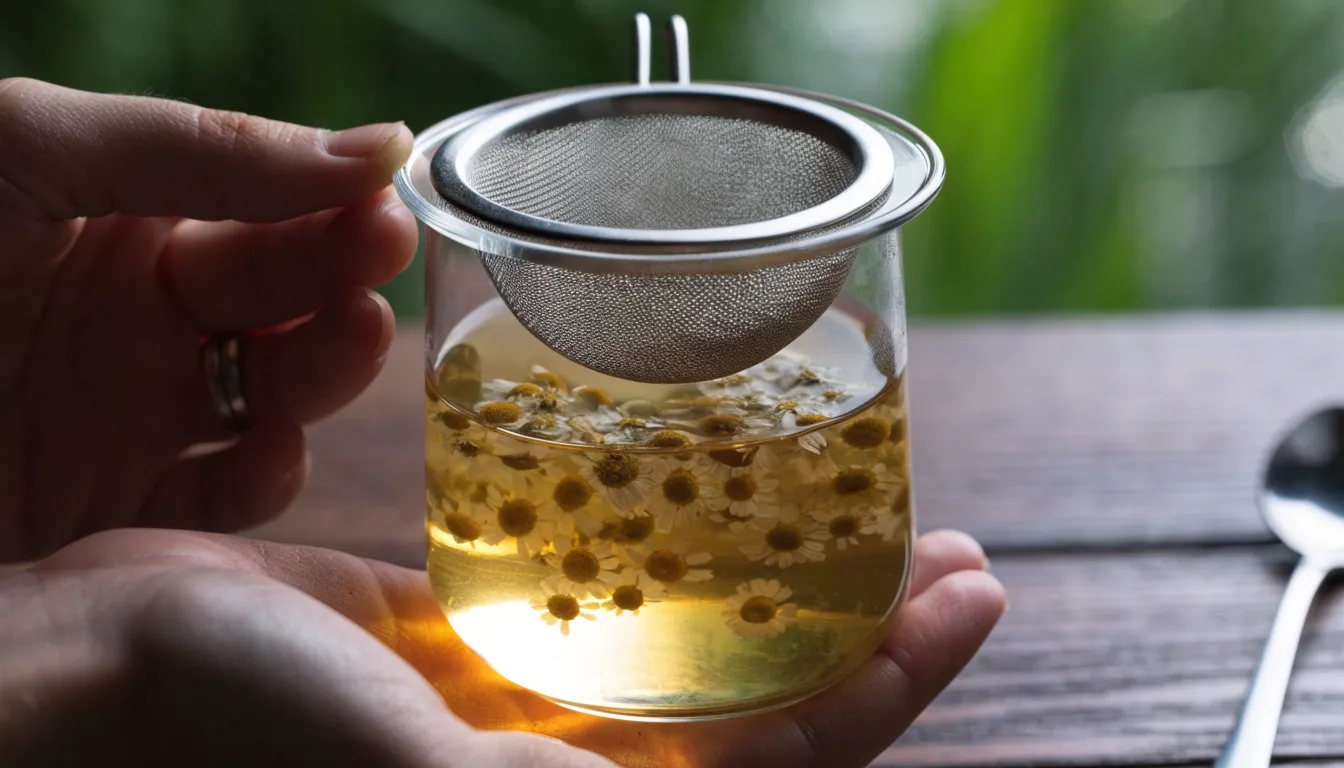
- Steep covered: Put the flowers in an infuser, strainer, or teapot, pour the water over them, and cover with a lid or saucer.
- Time and strain: Steep for 3 to 4 minutes for a light, floral cup, or 5 to 10 minutes for a fuller one. Longer steeping can make it bitter. Strain and add lemon or honey if you like.
Water Temperature and Steeping Time
Water at a full boil can bring out bitterness and drive off some of chamomile’s delicate aroma. Letting the kettle rest briefly brings it down to 90–95°C (200–205°F), which gives a sweeter, more aromatic cup.
Five to ten minutes of steeping gives dried flowers time to open fully. Shorter steeps can taste thin, while very long steeps get more bitter. Covering the cup keeps the aromatic oils from escaping with the steam.
Chamomile Tea Variations
- Honey: A teaspoon stirred into warm tea softens any bitterness. Never give honey to babies under 12 months.
- Lemon: A slice or squeeze adds a bright citrus note, and with honey it makes a classic cold-season drink.
- Mint: A few fresh peppermint or spearmint leaves added for the last minute of steeping give a cooling flavor that pairs well after a heavy meal.
- Ginger, lemon balm, or flowers: A slice of fresh ginger adds warmth, lemon balm adds a citrusy note, and elderflower or rose petals add fragrance.

Iced Chamomile Tea
- Cold brew: Combine 1 tablespoon of dried chamomile per cup of cold water in a covered jar. Refrigerate for 6 to 12 hours, tasting after 6, then strain. Cold-brewed tea is very smooth and keeps in the refrigerator for 2 to 3 days.
- Flash-chill: Brew at double strength (2 tablespoons per cup) for 5 minutes, strain, and pour over a tall glass of ice.
Stir in honey while the tea is still warm, or add lemon and mint over ice for a caffeine-free summer drink.
Other Ways to Use Chamomile
Chamomile’s mild flavor works in cooking and homemade body care too. The flowers can be infused into oils, vinegars, ice cream, or sorbet. A strong infusion can be added to a warm bath, alone or with oatmeal, or used as a rinse for hair and scalp.
Chamomile in Baking and Syrups
Use chamomile sparingly in sweets, since too much turns bitter:
- Simple syrup: Steep a generous handful of dried flowers in hot water for 10 to 15 minutes, strain, add an equal amount of sugar, and simmer until dissolved. Keep it refrigerated and use it on pancakes, in drinks, on cake layers, or with poached pears.
- Infused honey: Warm honey slightly, stir in dried flowers, let it sit for several hours or overnight, and strain.
- Shortbread and cakes: Mix a tablespoon of finely crushed dried flowers into shortbread dough, or steep flowers in warm milk or melted butter before mixing a cake batter.
Topical Chamomile
Patch-test any homemade chamomile preparation on a small area of skin first, especially if you have hay fever or plant allergies.
- Compress: Steep 2 tablespoons of dried flowers in 1 cup of just-boiled water for 10 minutes and strain. When cool, soak a clean cloth in it and hold it on irritated skin or insect bites for 15 to 20 minutes. Use a fresh batch and a clean cloth each time. Avoid using it on or near the eyes if you have any plant allergies.
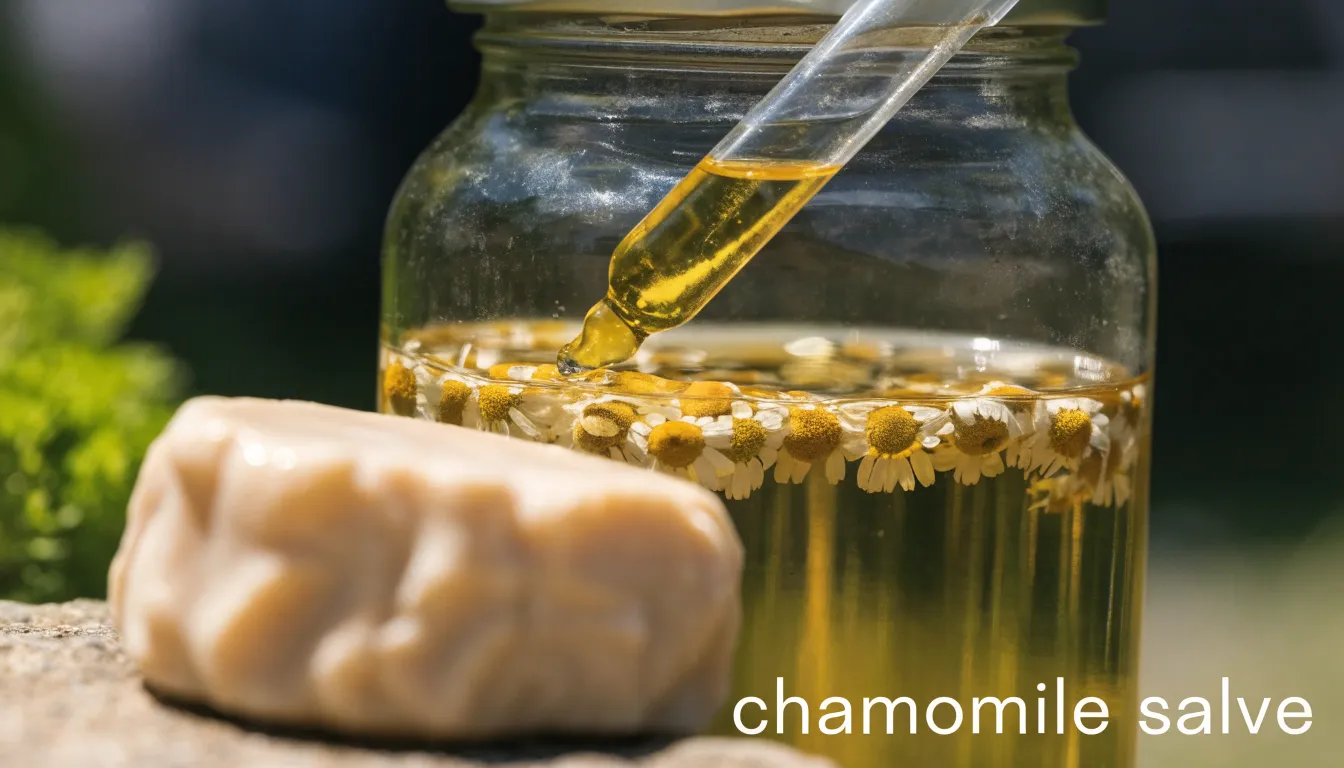
- Infused oil: Fill a clean, dry jar with dried flowers, cover completely with olive, almond, or sunflower oil, and seal. Leave it in a warm spot for 2 to 4 weeks, shaking daily, then strain through cheesecloth and store in a dark bottle.
- Salve: Gently melt 1 cup of chamomile-infused oil with 2 tablespoons of beeswax over low heat, pour into small tins, and let it set. Use it on dry hands, elbows, or rough patches.
How Much Chamomile to Take
- Tea: One to three cups a day is a typical amount for healthy adults. Drink a cup after meals for digestion, or 30 to 45 minutes before bed as part of a wind-down routine.
- Extract: The anxiety trials used capsules of German chamomile extract standardized to about 1.2% apigenin, at roughly 500 to 1,500 mg a day. That is far more concentrated than tea. Follow the product label, and talk to a doctor or pharmacist first if you take any medication.
Side Effects and Safety
Chamomile tea is generally safe for most adults, and side effects are uncommon (NCCIH). The most common problems are allergic reactions, nausea, and, at higher doses, drowsiness. Avoid combining concentrated chamomile with other sedating herbs or medications, and see how it affects you before driving. Because chamomile may slightly affect blood clotting and adds to the effects of sedatives, stop regular use about two weeks before scheduled surgery.
Chamomile and Ragweed Allergies
Because chamomile is in the same plant family as ragweed, chrysanthemums, marigolds, and daisies, people allergic to those plants can react to it. Reactions include:
- Mouth and throat: Tingling or swelling of the lips, tongue, or throat after drinking the tea.
- Skin: Itching, redness, hives, or allergic contact dermatitis after using chamomile on the skin.
- Breathing: Sneezing, watery eyes, congestion, or wheezing.
Severe reactions, including anaphylaxis, are rare but have been reported. Get emergency help for swelling of the face or throat or any difficulty breathing. If you have a known allergy to plants in this family, avoid chamomile or talk to an allergist first.
Drug Interactions
Talk to a doctor or pharmacist before using chamomile regularly or in concentrated form (extracts, tinctures, or capsules) if you take:
- Warfarin and other blood thinners: Case reports describe dangerously increased warfarin effects (high INR) and bleeding in people who drank chamomile tea or used chamomile products.
- Sedatives and sleep aids: Chamomile may add to the effects of benzodiazepines, sleep medications, sedating antihistamines, and alcohol, causing drowsiness or dizziness. The same caution applies to other calming herbs such as skullcap.
- Drugs broken down by the liver: Laboratory studies suggest chamomile may affect some liver enzymes that process medications, but whether this matters in people is not well established. Check with a pharmacist if you take a drug with a narrow safety range, such as cyclosporine.
Pregnancy and Breastfeeding
There is not enough research to know whether chamomile is safe in medicinal amounts during pregnancy or breastfeeding (NCCIH). Avoid chamomile extracts, tinctures, capsules, and essential oil during pregnancy. If you want to drink chamomile tea while pregnant or breastfeeding, check with your doctor or midwife about how much is reasonable for you.
Chamomile for Babies and Children
Chamomile tea is sometimes given to babies for colic or teething. Be cautious:
- Under 6 months: Don’t give chamomile tea or any other tea or water to babies under about 6 months old. It can fill them up and displace breast milk or formula, which they need for nutrition.
- Botulism risk: Clostridium botulinum spores have been found in chamomile, and infant botulism has been linked to chamomile tea. The same risk applies to honey, which must never be given to babies under 12 months.
- Older babies and children: Talk to your child’s doctor before giving chamomile. Most colic research tested multi-herb products, not chamomile alone.
- Never in place of medical care: See a doctor for fever, persistent crying, poor feeding, or any illness in a baby.
- Allergy watch: Stop immediately if a child develops a rash, swelling, or trouble breathing.
How to Grow Chamomile
Start seeds indoors six to eight weeks before the last frost, or sow them outdoors in early spring once the soil reaches about 7°C (45°F). Press the tiny seeds lightly into the soil surface without burying them, since they need light to germinate, and keep them moist until seedlings appear in 10 to 14 days. Space plants 20 to 30 centimeters (8 to 12 inches) apart for good airflow, which helps prevent mildew.
Give chamomile full sun, at least six hours of direct light a day, for the most flowers. It prefers well-drained, sandy soil with a pH of about 5.6 to 7.5 and tolerates poor, dry ground. Add compost and grit to heavy clay to improve drainage.
Harvest on a dry morning after the dew has gone, picking flower heads when they are fully open. Regular picking encourages more blooms through the summer. Dry the flowers in a single layer on a screen or tray in a warm, dark, well-ventilated room, turning them every day or two. Once they are crisp (after one to two weeks), store them in airtight glass jars away from heat and light.

Gardeners growing other medicinal herbs, such as holy basil (tulsi), can usually grow chamomile alongside them.
Frequently Asked Questions
Does chamomile tea help with sleep?
The evidence is weak. A few small studies in older adults and new mothers reported modest improvements in sleep quality, but the one trial in people with insomnia found no meaningful benefit. A warm, caffeine-free cup can still be a relaxing part of a bedtime routine.
Does chamomile help with anxiety?
A few small trials found that standardized chamomile extract capsules modestly reduced symptoms of mild to moderate generalized anxiety. These trials used concentrated extracts, not tea, and chamomile is not a substitute for professional treatment.
What is the difference between German and Roman chamomile?
They are two different species. German chamomile is an upright annual with a sweeter, apple-like taste and is the type used in most teas and research. Roman chamomile is a low-growing perennial with a more bitter taste, used mainly in aromatherapy and cosmetics.
How much chamomile tea can I drink a day?
One to three cups a day is typical for healthy adults. Chamomile extracts used in research are far more concentrated than tea, so follow product labels and talk to a doctor or pharmacist first if you take medication.
How do I make chamomile tea?
Use about 1 heaped teaspoon (2 grams) of dried flowers per cup, pour over water at 200–205°F (90–95°C), cover, and steep for 3 to 10 minutes depending on how strong you like it. Strain and add lemon or honey if you wish.
Can chamomile interact with medications?
Yes. Chamomile has been linked to dangerous increases in warfarin’s effects, can add to the drowsiness caused by sedatives and alcohol, and may affect how the liver processes some drugs. Talk to your doctor or pharmacist before using it regularly if you take medication.
Is chamomile safe during pregnancy and breastfeeding?
There isn’t enough research to say. Avoid chamomile extracts, capsules, and essential oil during pregnancy, and ask your doctor or midwife before drinking chamomile tea regularly while pregnant or breastfeeding.
Can I give chamomile tea to my baby?
Don’t give chamomile tea, or any tea or water, to babies under about 6 months. Chamomile has been linked to infant botulism, and honey must never be given to babies under 12 months. Talk to your child’s doctor before giving chamomile to an older baby or child.
Does chamomile tea contain caffeine?
No. Pure chamomile is naturally caffeine-free. Check labels on blends, since some contain black or green tea.
Does chamomile help with weight loss?
There is no good evidence that it does. Unsweetened chamomile tea can replace sugary drinks, but it is not a weight-loss aid.
How long does dried chamomile last?
It keeps its best flavor for about 6 to 12 months in an airtight container away from light and heat. Older chamomile isn’t harmful, but it loses aroma and tastes flat.
Sources
- National Center for Complementary and Integrative Health (NCCIH): Chamomile.
Matthew Atkins
Matthew studied biology and has worked in conservation. He's been interested in medicinal herbs for many years. More about HerbsList
This page is for general information only and isn't medical advice. Talk with a doctor or pharmacist before taking any herb or supplement. Full disclaimer