Chinese Herbs: A Guide to Common TCM Herbs and Their Uses
 By Matthew Atkins · Updated
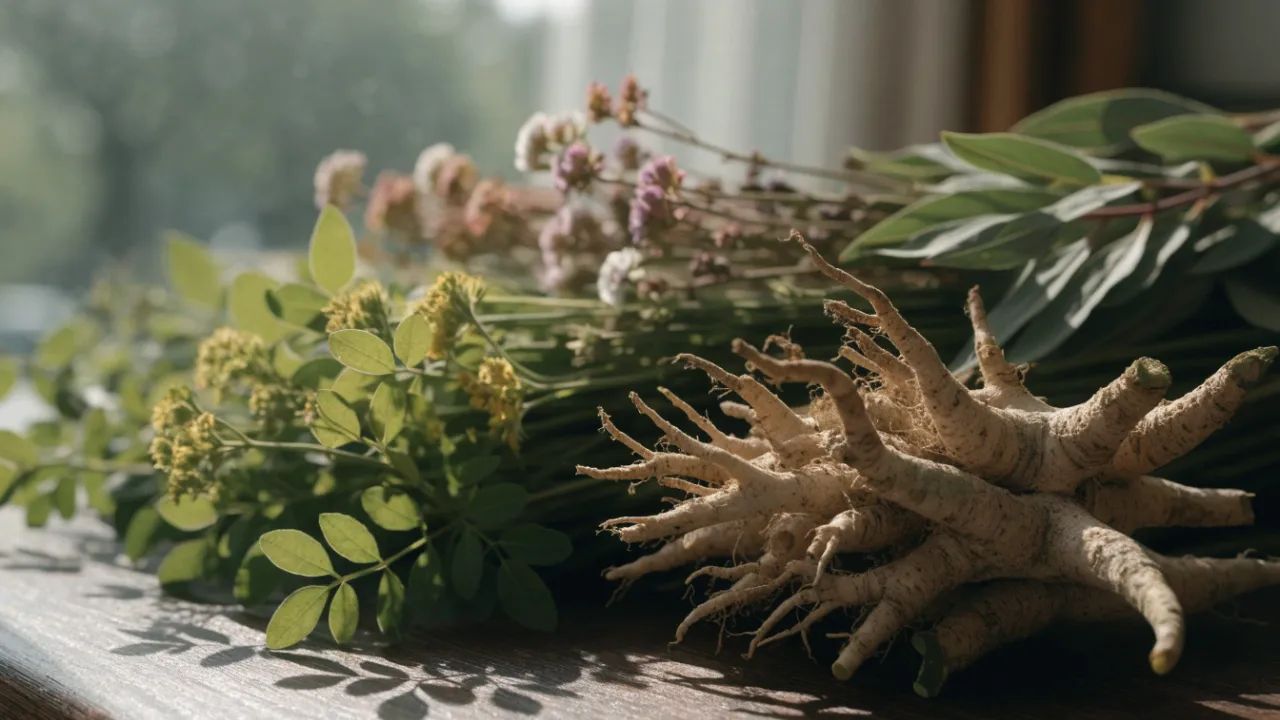
Traditional Chinese Medicine (TCM) classifies herbs by their thermal nature (warming to cooling), their flavor (sweet, sour, bitter, pungent, or salty), and the organ systems they are said to act on. Practitioners usually combine 6 to 12 herbs into a formula rather than prescribing one herb alone. This guide explains how that system works and profiles 13 common Chinese herbs, each with its traditional uses, what modern research shows, a typical adult dose, and key safety cautions. For most of these herbs, the traditional uses have not been confirmed in rigorous clinical trials.
Table of Contents
- What Is Traditional Chinese Medicine?
- How TCM Classifies Herbs
- Common Chinese Herbs and Their Uses
- How We Rate the Evidence
- Ginseng (Ren Shen)
- Astragalus (Huang Qi)
- Licorice Root (Gan Cao)
- Goji Berry (Gou Qi Zi)
- Dong Quai (Dang Gui)
- White Peony Root (Bai Shao)
- Ginger (Sheng Jiang)
- Cinnamon Bark (Rou Gui)
- Jujube (Da Zao)
- Chrysanthemum (Ju Hua)
- Schisandra (Wu Wei Zi)
- Reishi (Ling Zhi)
- Cordyceps (Dong Chong Xia Cao)
- Chinese Herbs Quick Reference Table
- How Chinese Herbs Are Taken
- Side Effects and Safety
- How to Buy Quality Chinese Herbs
- How to Find a Qualified TCM Practitioner
- Frequently Asked Questions
- Sources
What Is Traditional Chinese Medicine?
Traditional Chinese Medicine (TCM) is a system of medicine developed in China over more than two thousand years. Practitioners look for “patterns of disharmony” by examining the tongue and complexion, listening to the voice and breathing, asking about sleep, digestion, and lifestyle, and feeling the pulse at several positions on each wrist. Treatment aims at the underlying pattern rather than a single symptom and may include herbal formulas, acupuncture, cupping, moxibustion, diet, and movement practices such as tai chi and qigong. TCM also uses the five elements (wood, fire, earth, metal, and water) to describe relationships between organs and body functions.

A Brief History of TCM
The written record of Chinese herbal medicine goes back more than two thousand years. The Shennong Bencao Jing, attributed to the legendary “divine farmer” Shennong and compiled around the first or second century CE, lists about 365 substances in three grades:
- Upper grade: Considered suitable for long-term use and general health.
- Middle grade: Taken for specific conditions.
- Lower grade: Stronger or toxic substances reserved for serious illness.
Over the following centuries, physicians recorded new plants, preparations, and clinical observations. The Bencao Gangmu, completed by Li Shizhen in 1578, describes nearly two thousand substances and influenced medicine well beyond China. Theoretical texts such as the Huangdi Neijing and the Shanghan Lun set out the framework of diagnosis and formula-building that TCM practitioners still use.
In the twentieth century, Chinese medicine was standardized through university training, official formularies, and hospital practice in China, and researchers began studying herbs with modern laboratory methods. One well-known result is artemisinin, the antimalarial drug developed from sweet wormwood (qing hao), which earned Tu Youyou a share of the 2015 Nobel Prize in Physiology or Medicine.
Qi, Yin and Yang Explained
In TCM theory, health depends on the smooth flow of Qi, a vital energy said to animate all living processes and to move through the body along channels called meridians. When Qi flows well, the organs are thought to function properly. Stress, poor diet, weather, or emotional strain are believed to disrupt it: depleted Qi is associated with fatigue, blocked Qi with pain or bloating, and disordered Qi with erratic symptoms.
Yin and Yang describe complementary forces in all things. Yin represents the cool, moist, quiet, and restorative aspects of the body; Yang represents the warm, active, and protective aspects. In TCM, a person with too much Yang may be described as feeling hot, restless, and thirsty, while a person with too much Yin may feel chilly, sluggish, and puffy.
These are traditional concepts for describing patterns of symptoms. Qi and meridians do not correspond to structures identified in anatomy or physiology, and they should not be read as scientific explanations. Practitioners use them to choose herbs that are said to “move” Qi, “tonify” deficiencies, or rebalance Yin and Yang.
What the Research Says About TCM Herbs
Research on Chinese herbs ranges from laboratory studies to randomized controlled trials. Lab and animal studies often isolate single compounds, such as ginsenosides from ginseng, astragalosides from astragalus, and berberine from Coptis, to study their effects on cells, inflammation, and the immune system.
Clinical evidence varies widely. A few herbs have reasonable support for specific uses; ginger for nausea is the clearest example on this page. Most others rest on small studies, studies with design problems, or traditional use alone. Because formulas differ in sourcing, processing, and ingredients, results are hard to replicate. According to the US National Center for Complementary and Integrative Health, there is not enough rigorous evidence to show that Chinese herbal products are effective for most conditions (NCCIH).
Safety research is just as important. It covers herb-drug interactions, liver and kidney damage, and contamination of products with heavy metals, undeclared drugs, or the wrong plant species. Standards for herbal products also vary by country, which affects both quality and the health claims sellers can make.
How TCM Classifies Herbs
TCM describes each herb by its “energetic” properties: its thermal nature, its flavor, the organ systems or meridians it is said to enter, and the direction it is said to move energy. Some herbs are described as rising and dispersing outward; others as sinking and settling. Together, these properties form a profile that a practitioner matches to a patient’s pattern. These categories are part of TCM’s traditional framework, not measurements of how a herb acts in the body.
Warming vs. Cooling Herbs
Every herb in TCM has a thermal nature: cold, cool, neutral, warm, or hot, with gradations in between.
Warming herbs, such as cinnamon bark and fresh ginger, are used for what TCM calls “cold patterns”: feeling chilly, cold hands and feet, a pale complexion, or a slow, weak pulse. Cooling herbs, such as chrysanthemum and honeysuckle, are used for “heat patterns”: fever, thirst, a red face, irritability, or a rapid pulse. When signs of both appear, practitioners combine warming and cooling herbs in proportion.
The Five Flavors
The five flavors describe both an herb’s actual taste and the action TCM assigns to it. Many herbs have more than one flavor.
- Sweet (such as licorice and jujube): Associated with the Spleen and Stomach. Said to tonify Qi and blood, moisten, ease tension, and harmonize other herbs in a formula.
- Sour (such as schisandra and hawthorn): Associated with the Liver. Said to be astringent, holding in fluids, for example to curb excessive sweating or diarrhea.
- Bitter (such as coptis and gentian): Associated with the Heart. Said to drain and dry, clearing “heat” and “dampness.”
- Pungent (such as ginger and cinnamon bark): Associated with the Lung. Said to disperse and move, promoting circulation and “releasing the exterior” in early colds.
- Salty (such as seaweed and oyster shell): Associated with the Kidney. Said to soften hardness and resolve lumps.
Why TCM Herbs Are Used in Formulas
Chinese herbs are rarely prescribed alone. They are combined into formulas following a traditional hierarchy known as jun-chen-zuo-shi (chief, deputy, assistant, envoy):
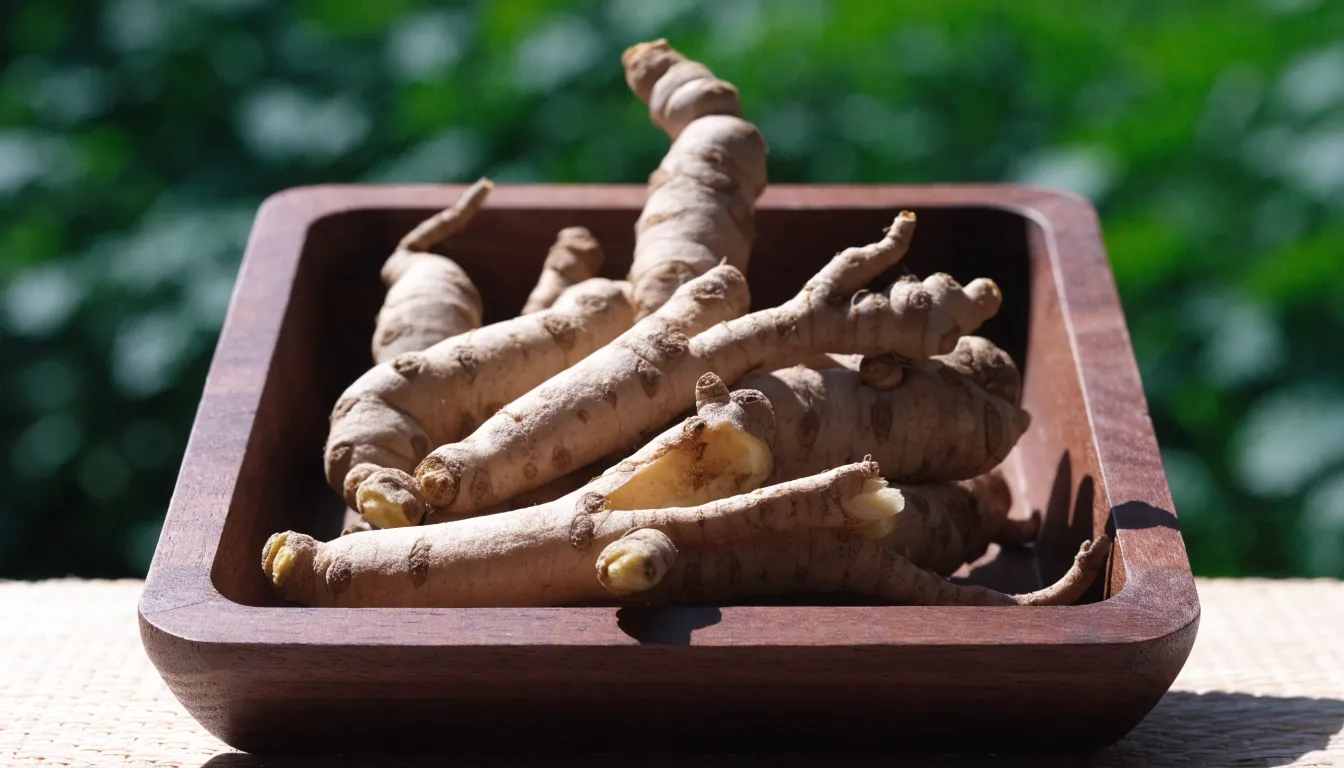
- Chief (jun): The main herb, aimed at the primary pattern or symptom.
- Deputy (chen): Strengthens the chief herb or treats secondary aspects of the condition.
- Assistant (zuo): Treats accompanying symptoms or is intended to moderate the harsh or toxic properties of the chief herb.
- Envoy (shi): Directs the formula to a particular area of the body or harmonizes the ingredients.
Practitioners adjust the herbs and amounts to fit each patient. In TCM theory, combining herbs this way increases their effect and reduces side effects. That idea has not been well tested, and adding more herbs also adds more possible side effects and drug interactions.
Common Chinese Herbs and Their Uses
A small group of herbs appears again and again in both classical formulas and modern supplements. Some are everyday foods, such as ginger, jujube, and goji; others are stronger medicinal herbs.
How We Rate the Evidence
- Strong: Several well-designed randomized trials in people with consistent, replicated results. None of the herbs on this page reaches this level.
- Moderate: Some good-quality human trials with mostly positive results, but small, short, or not well replicated.
- Limited: A few small or mixed human studies, or mainly laboratory and animal research.
- Traditional: Long historical use with little or no clinical testing.
Doses are typical adult ranges from studies, standardized products, or common TCM practice. In TCM, herbs are usually taken as part of a formula prescribed by a practitioner, and the amounts in a formula can differ from single-herb supplement doses. Follow your practitioner or product label, and check with a doctor or pharmacist before starting any herb if you take medication.
Ginseng (Ren Shen)
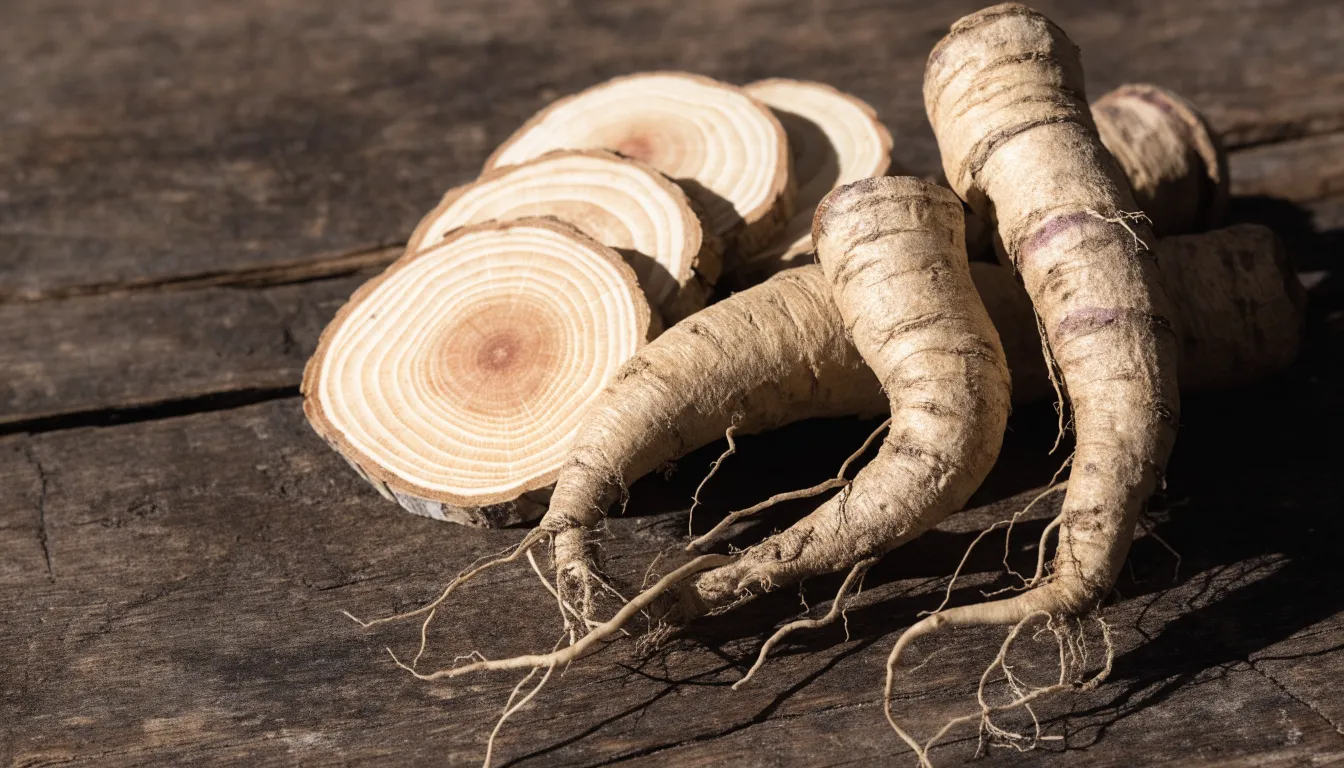
Ginseng (Panax ginseng, ren shen) is one of TCM’s main Qi tonics, traditionally used to restore energy, calm the spirit, and sharpen the mind. For a deeper profile, see our guide to Korean ginseng. Its active compounds are called ginsenosides.
Clinical trials for fatigue, mental performance, and immune function have produced mixed results. The most consistent human evidence is for erectile dysfunction, where several small trials reported improvements (NCCIH). Studies showing fewer colds mostly tested American ginseng, a different species.
Evidence: Limited (fatigue, cognition, immunity); Moderate (erectile dysfunction) · Typical adult dose: 200–400 mg/day of standardized extract, or 1–2 g dried root · Cautions: Can cause insomnia, headache, and digestive upset. Can lower blood sugar and add to diabetes drugs. May reduce the effect of warfarin and interact with MAO inhibitors and stimulants. Avoid in pregnancy and breastfeeding.
Astragalus (Huang Qi)
Astragalus (Astragalus membranaceus, huang qi) is traditionally used to strengthen “defensive Qi” (wei qi), the body’s protection against outside illness in TCM theory. It is given to people who catch colds often, tire easily, or have a poor appetite, and it is commonly cooked into soups or combined with ginseng. You can read more in our overview of astragalus root.
Its polysaccharides and saponins stimulate immune cells in laboratory studies, but there is little good human evidence that astragalus prevents colds or helps other conditions (NCCIH). Traditional claims about longevity have not been tested in people.
Evidence: Limited · Typical adult dose: 2–6 g/day as powder or extract; traditional decoctions often use larger amounts of dried root · Cautions: May counteract immunosuppressants, so avoid after organ transplant and with autoimmune conditions unless supervised. May interact with blood thinners and blood pressure drugs. Not studied in pregnancy.
Licorice Root (Gan Cao)
Chinese licorice (Glycyrrhiza uralensis, gan cao) is one of the most widely used herbs in TCM. Because of its sweetness, practitioners add small amounts to many formulas to “harmonize” the other ingredients and soften bitter or harsh herbs. It is also used on its own for sore throat, cough, and stomach discomfort. See our guide to Chinese licorice root for more.
Its compounds, including glycyrrhizin and liquiritin, have shown anti-inflammatory effects in laboratory studies. The same compound, glycyrrhizin, is also responsible for licorice’s main risk: with regular use, it causes the body to hold sodium and lose potassium (NCCIH).
Evidence: Traditional · Typical adult dose: Small amounts (about 2–10 g dried root) as one ingredient in a formula, for short periods · Cautions: Regular or high-dose use can raise blood pressure and cause swelling, low potassium, muscle weakness, and heart rhythm problems. Avoid with high blood pressure, heart or kidney disease, low potassium, and in pregnancy. Interacts with diuretics, digoxin, corticosteroids, and blood pressure drugs. Deglycyrrhizinated licorice (DGL) does not carry these risks.
Goji Berry (Gou Qi Zi)
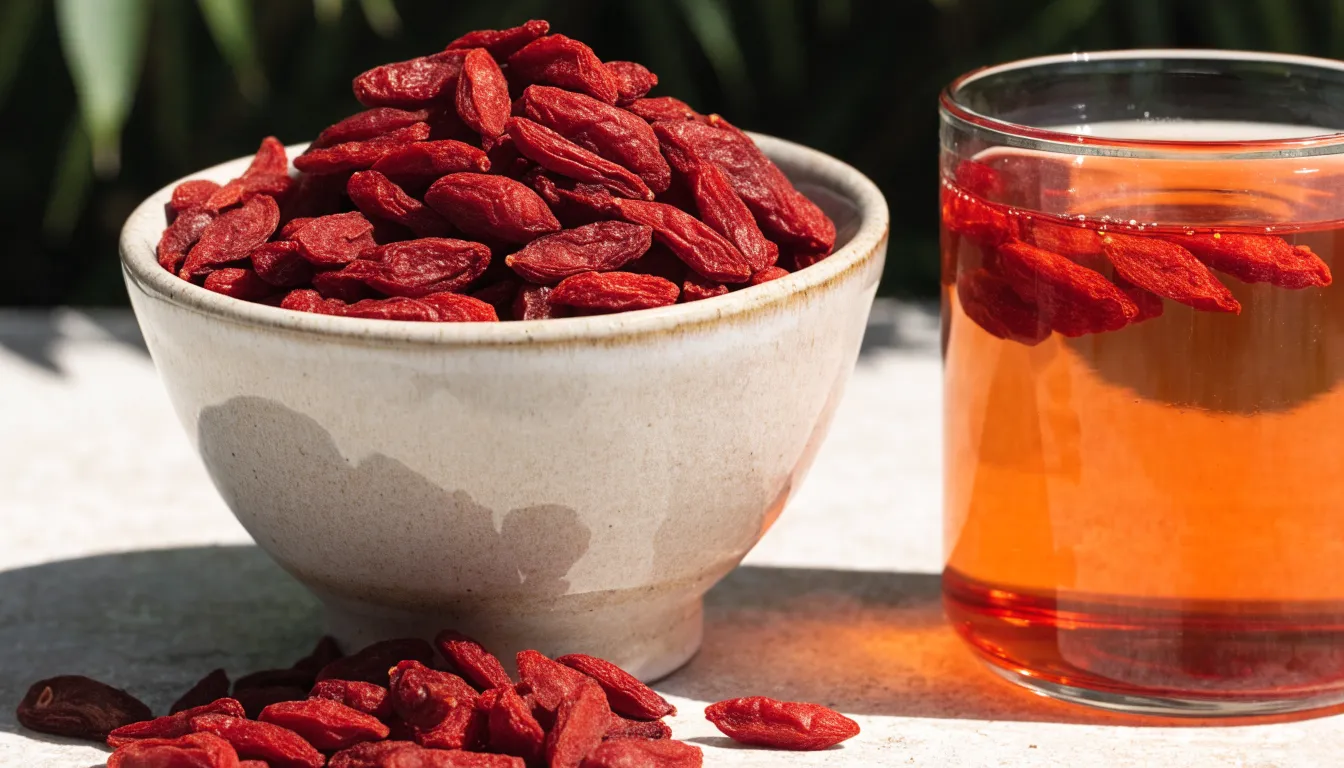
Goji berry (Lycium barbarum, gou qi zi) is traditionally used to nourish the Liver and Kidney, which in TCM theory support the eyes. It is used for dry, tired eyes, blurred vision, and dizziness, often with chrysanthemum.
Goji berries contain zeaxanthin and lutein, pigments that collect in the retina. Small trials found that eating goji can raise levels of these pigments in the eye, but they have not shown that it improves vision or prevents eye disease. Its antioxidant effects come mainly from laboratory studies.
Evidence: Limited · Typical adult dose: A small handful (about 10–30 g) of dried berries daily, eaten or brewed as tea · Cautions: Can increase the effect of warfarin, raising bleeding risk; case reports describe dangerously high INR levels. Rarely causes allergic reactions. May lower blood sugar and blood pressure. Avoid medicinal amounts in pregnancy.
Dong Quai (Dang Gui)
Dong quai (Angelica sinensis, dang gui) is traditionally regarded as TCM’s main blood tonic for women. It is used to “nourish and move the blood” and is given for irregular or light periods, menstrual cramps, and fatigue, usually in formulas with peony root and other herbs.
There is little reliable evidence that dong quai helps with menstrual problems or menopause symptoms. The European Medicines Agency found no clinical data supporting these uses, and NCCIH notes the lack of reliable research (NCCIH).
Evidence: Traditional · Typical adult dose: Usually taken as part of a formula prescribed by a qualified practitioner · Cautions: Increases bleeding risk with warfarin and other blood thinners. Can make skin more sensitive to sunlight. Avoid in pregnancy and breastfeeding, and with hormone-sensitive conditions such as breast cancer.
White Peony Root (Bai Shao)
White peony root (Paeonia lactiflora, bai shao) is traditionally used to “nourish Liver blood” and relieve cramping. It appears in many formulas for menstrual cramps, abdominal cramping, and muscle twitches, often paired with licorice. It is also used for irritability and restlessness. Clinical research is limited, and most of it tests multi-herb formulas rather than peony alone.
Evidence: Traditional · Typical adult dose: About 6–15 g dried root as part of a formula · Cautions: May slow blood clotting, so use caution with blood thinners and before surgery. Can cause loose stools. Avoid in pregnancy unless prescribed by a qualified practitioner.
Ginger (Sheng Jiang)
Fresh ginger (Zingiber officinale, sheng jiang) is a warming herb in TCM, used to settle the stomach and drive out “cold” after chilly weather or cold, raw foods. It is commonly simmered in broths or with brown sugar after getting caught in the rain. Dried ginger (gan jiang) is considered more strongly warming.
Unlike most herbs on this page, ginger has good clinical support for one use: several trials show it eases nausea, especially in early pregnancy, and some support it for motion sickness (NCCIH).
Evidence: Moderate (nausea) · Typical adult dose: 1 g/day of dried ginger in divided doses, or tea from a few slices of fresh root · Cautions: In pregnancy, stay at or below 1 g/day and check with your provider. Large doses can cause heartburn. May increase bleeding risk with blood thinners.
Cinnamon Bark (Rou Gui)
Cinnamon bark (rou gui) is the thick bark of the cassia tree (Cinnamomum cassia). In TCM, it is a strongly warming herb used to strengthen “Kidney Yang,” and it is given for cold hands and feet, fatigue, and deep aching pain in the lower back, knees, and abdomen that feels better with warmth. Because it is considered very hot, practitioners use it carefully and usually within a balanced formula. Clinical evidence for these uses is limited.
Evidence: Traditional · Typical adult dose: About 1–5 g as part of a formula, for short periods · Cautions: Cassia cinnamon is high in coumarin, which can damage the liver in large amounts, especially with regular use or existing liver disease. May lower blood sugar and add to diabetes drugs. Avoid medicinal amounts in pregnancy.
Jujube (Da Zao)
Jujube (Ziziphus jujuba, da zao), also called the Chinese red date, is a sweet, food-like herb traditionally used to strengthen digestion, nourish the blood, and calm the mind. It appears in formulas for fatigue, poor appetite, and restless sleep, and it is commonly simmered in soups, teas, and rice porridge (congee) with ginger. Clinical research is very limited, but jujube is widely eaten as food.
Evidence: Traditional · Typical adult dose: 3–5 dried dates (about 6–15 g) daily in food or tea · Cautions: Generally safe in food amounts. Large amounts can cause bloating. People with diabetes should account for its sugar content.
Chrysanthemum (Ju Hua)
Chrysanthemum flowers (Chrysanthemum morifolium, ju hua) are a cooling herb used to “clear heat” from the Liver channel in TCM theory. Chrysanthemum tea is traditionally used for red, dry, or tired eyes and headaches, and, with mulberry leaf or peppermint, for early colds with sore throat and mild fever. There is little clinical research behind these uses.
Evidence: Traditional · Typical adult dose: 5–10 g dried flowers steeped as tea, up to a few cups daily · Cautions: Avoid if allergic to ragweed, daisies, or related plants. In TCM, it is used cautiously by people with weak digestion or loose stools.
Schisandra (Wu Wei Zi)
Schisandra (Schisandra chinensis, wu wei zi, or “five-flavor seed”) is said to contain all five TCM flavors. It is traditionally used to calm the mind, sharpen concentration, and protect the liver. A few small human studies suggest it may reduce mental fatigue, and its lignans, especially schisandrin, have shown liver-protective effects in laboratory and animal studies.
Schisandra also changes how the liver breaks down many medications, especially through the enzyme CYP3A4. That is a drug-interaction risk: it can raise or lower blood levels of drugs such as tacrolimus.
Evidence: Limited · Typical adult dose: 1.5–6 g/day of dried berry, taken in the morning or early afternoon · Cautions: Talk to a doctor or pharmacist before use if you take any prescription medication, especially immunosuppressants. Can worsen heartburn and reflux. Avoid in pregnancy.
Reishi (Ling Zhi)
Reishi (Ganoderma lucidum, ling zhi), sometimes called the “mushroom of immortality,” is classed in early texts as an upper-grade herb for long-term use. It is traditionally taken to calm the mind, improve sleep, and strengthen resistance to illness. Its polysaccharides and triterpenes affect immune activity in laboratory studies, but there is little human research on these uses. See our guide to reishi mushroom for more.
Evidence: Limited (immune effects); Traditional (sleep and stress) · Typical adult dose: 1.5–9 g/day of dried mushroom as tea or decoction, or extract per label · Cautions: Liver injury has been reported with reishi powder. May slow blood clotting and lower blood pressure, so use caution with blood thinners and blood pressure drugs, and stop two weeks before surgery. Avoid in pregnancy and breastfeeding.
Cordyceps (Dong Chong Xia Cao)
Cordyceps (dong chong xia cao, “winter worm, summer grass”) is named for wild Ophiocordyceps sinensis, a fungus that grows on caterpillar larvae in the Himalayan highlands. Wild cordyceps is extremely expensive, so most supplements are lab-grown Cordyceps militaris or fermented mycelium. In TCM, it is used to support the Lungs and Kidneys, for breathing and stamina. It is now popular with athletes, but human studies on exercise performance have been inconsistent. See our cordyceps guide for more.
Evidence: Limited · Typical adult dose: 1–3 g/day · Cautions: May interact with blood thinners, diabetes drugs, and immunosuppressants. Avoid with autoimmune conditions unless supervised, and in pregnancy.
Chinese Herbs Quick Reference Table
| Herb | Pinyin | Nature | Traditional use | Evidence | Key caution |
|---|---|---|---|---|---|
| Ginseng | Ren Shen | Slightly warm | Energy, mental focus | Limited | Insomnia; blood sugar; warfarin |
| Astragalus | Huang Qi | Slightly warm | Resistance to colds, fatigue | Limited | Immunosuppressants, autoimmune disease |
| Licorice root | Gan Cao | Neutral | Harmonizing formulas, cough, sore throat | Traditional | Blood pressure, low potassium |
| Goji berry | Gou Qi Zi | Neutral | Eyes, dizziness | Limited | Warfarin |
| Dong quai | Dang Gui | Warm | Menstrual problems | Traditional | Bleeding risk; avoid in pregnancy |
| White peony root | Bai Shao | Cool | Cramping, irritability | Traditional | Bleeding risk |
| Fresh ginger | Sheng Jiang | Warm | Nausea, chills | Moderate (nausea) | Heartburn; blood thinners |
| Cinnamon bark | Rou Gui | Hot | Cold hands and feet, deep cold pain | Traditional | Coumarin and liver |
| Jujube | Da Zao | Warm | Digestion, restless sleep | Traditional | Sugar content |
| Chrysanthemum | Ju Hua | Cool | Tired eyes, headaches, early colds | Traditional | Daisy-family allergy |
| Schisandra | Wu Wei Zi | Warm | Focus, liver | Limited | Many drug interactions (CYP3A4) |
| Reishi | Ling Zhi | Neutral | Calm, sleep, immunity | Limited | Liver; bleeding risk |
| Cordyceps | Dong Chong Xia Cao | Warm | Breathing, stamina | Limited | Immunosuppressants |
How Chinese Herbs Are Taken
Chinese herbs are taken as decoctions, granules, powders, pills, syrups, tinctures, medicinal wines, and teas, or applied to the skin as poultices, plasters, and washes. Many raw herbs first go through paozhi, traditional processing such as stir-frying, honey-frying, or cooking with vinegar or salt, which is intended to reduce toxicity or change the herb’s action. A typical formula combines 6 to 12 herbs, with each herb usually measured at 3 to 15 grams.
Decoctions
To brew a decoction at home, use a ceramic, glass, or earthenware pot. Traditionally, metal pots are avoided.
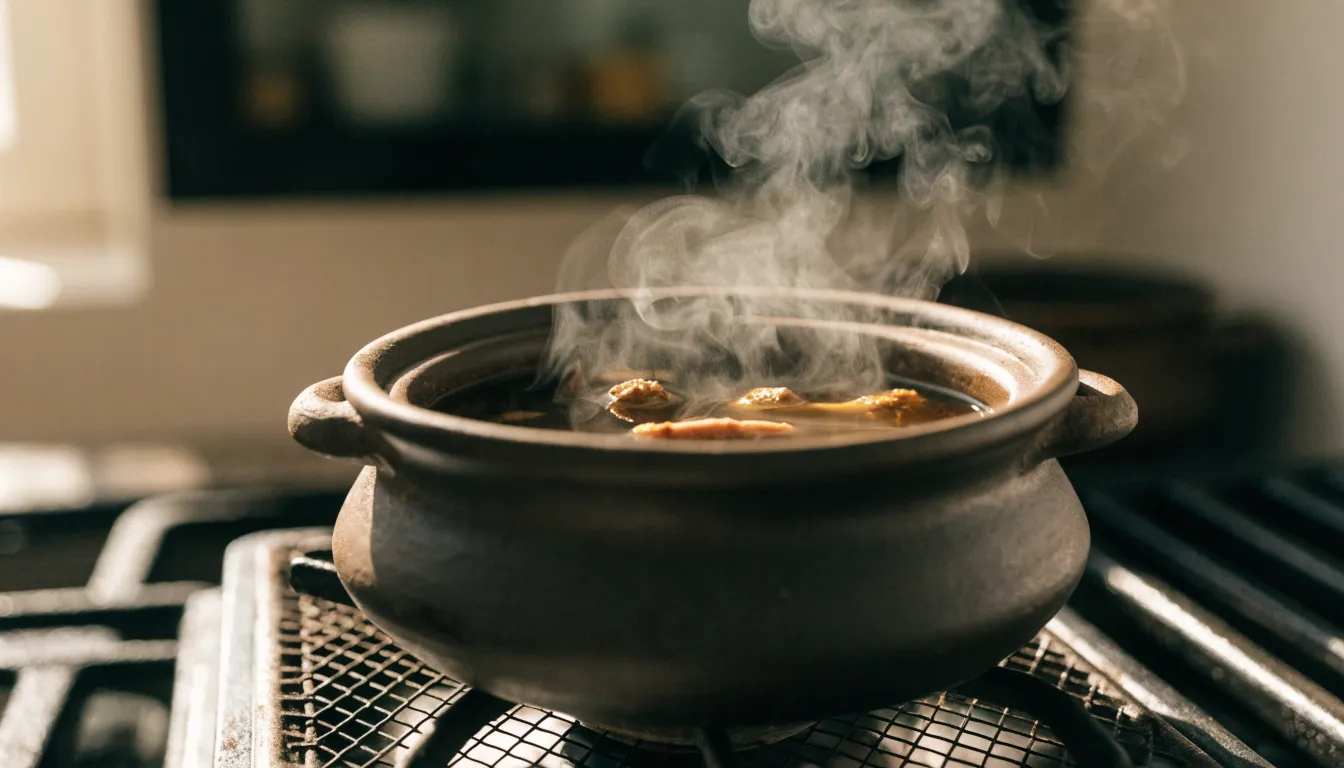
- Rinse and soak: Rinse the herbs briefly under cool water, place them in the pot, and cover with cold water by about an inch. Soak for 20 to 30 minutes.
- Boil and simmer: Bring to a gentle boil, then reduce to a low simmer with the lid partly on. Simmer leaves and flowers for 30 to 40 minutes, and roots, bark, and seeds for up to an hour, until the liquid reduces by about half.
- Strain and re-brew: Strain through a fine sieve. For a traditional second brewing, add fresh water to the same herbs, simmer for a shorter time, and combine both batches.
Drink the decoction warm in two or three doses through the day. Keep leftovers in the refrigerator for a day or two and reheat gently.
Granules and Powders
Granules are made by brewing herbs into a decoction, concentrating it, and drying it into a powder or small granules. They dissolve in hot water in minutes and are easy to carry. Single-herb granules also let practitioners build custom formulas and adjust them gram by gram as symptoms change.
Patent Pills and Capsules
Patent medicines (wan) are ready-made formulas sold as small teapills, capsules, or tablets. They are convenient, but they are also the category of Chinese herbal products most often found in FDA warnings to contain heavy metals or undeclared prescription drugs, such as steroids or blood thinners. Buy only from established brands that publish independent test results, check the label for a full ingredient list with amounts, and be wary of products sold online with dramatic claims.
Simple Chinese Herbal Teas
Mild, food-like Chinese herbs can be brewed at home. Use 5 to 10 grams of dried herbs per pot, pour over freshly boiled water, and steep for 5 to 10 minutes. The same herbs can usually be steeped two or three times.
- Chrysanthemum and goji tea: Steep dried chrysanthemum flowers with a few goji berries for a light afternoon drink.
- Ginger and jujube tea: Gently simmer several slices of fresh ginger with 3 to 5 dried red dates for 10 minutes.
- Honeysuckle tea: Steep dried honeysuckle flowers (jin yin hua), a traditional cooling summer tea, for about 5 minutes.
If you take warfarin, skip the goji. If you’re allergic to ragweed or daisies, skip the chrysanthemum.
Side Effects and Safety
Chinese herbs contain active compounds that can cause side effects, from digestive upset, headaches, and rashes to allergic reactions, liver and kidney damage, and heart problems. Concentrated herbal products should not be self-prescribed. Stop taking an herb and get medical help promptly if you notice unusual symptoms, especially dark urine, yellowing skin or eyes, swelling, or palpitations.
Drug Interactions
Herbs can change how medications are absorbed, broken down, or work in the body. Talk to a doctor or pharmacist before combining Chinese herbs with:
- Blood thinners (such as warfarin): Dong quai, goji berry, dan shen (Salvia miltiorrhiza), white peony, reishi, and ginger may increase bleeding risk. Ginseng may make warfarin less effective.
- Immunosuppressants (such as cyclosporine and tacrolimus): Schisandra and several other herbs affect the liver enzymes that break these drugs down, while astragalus and cordyceps may counteract their effect. Because these drugs work only within a narrow range, small changes can cause toxicity or organ rejection.
- Diabetes medications: Ginseng, bitter melon, goji, cinnamon, and cordyceps may add to their effect and cause low blood sugar (dizziness, sweating, confusion).
- Blood pressure drugs, diuretics, digoxin, and corticosteroids: Licorice raises blood pressure and lowers potassium, which can be dangerous with these drugs.
- Many other prescription drugs: Schisandra affects the CYP3A4 enzyme, which breaks down a large share of common medications.
Keep a current list of all herbs and supplements, share it with every doctor and pharmacist you see, and introduce only one new product at a time. Taking herbs and drugs at different times of day does not prevent most of these interactions.
Contamination and Heavy Metals
Herbs grown in polluted or mineral-rich soil can build up heavy metals such as lead, arsenic, cadmium, and mercury, which washing and drying don’t remove and which can damage the kidneys and nervous system. Some imported products also contain pesticide residues.
Other problems include substituting cheaper or misidentified plants, adding undeclared drugs such as steroids or diuretics, and treating herbs with dyes or sulfur dioxide, which can trigger reactions in people with asthma. Avoid herbs with unusual colors, unnatural brightness, mold, or off smells.
Herbs to Avoid (Aristolochic Acid and Others)
Some plants used in Chinese medicine have serious, well-documented toxicity:
- Plants containing aristolochic acid: Found in species such as Aristolochia fangchi and in some batches of herbs sold as guang fang ji or mu tong, aristolochic acid causes kidney failure and urinary tract cancers. These plants have been mixed up with safe herbs that have similar names, and the FDA and regulators in many other countries have warned against or banned them. Kidney damage can build silently over months or years.
- Ephedra (ma huang): Contains ephedrine, which has been linked to heart attacks, strokes, and deaths. The FDA banned ephedra in US dietary supplements in 2004.
- Aconite (fu zi, chuan wu): Toxic to the heart and nervous system if not properly processed. It has caused fatal poisonings.
Anyone with liver, kidney, bleeding, or autoimmune conditions should talk to their doctor before taking any Chinese herbal product.
Pregnancy and Breastfeeding
Many Chinese herbs should not be used during pregnancy because they can stimulate the uterus, affect hormones, or harm the developing baby:
- Herbs said to strongly “move the blood”: Dong quai, dan shen, safflower (hong hua), and peach kernel (tao ren).
- Purgatives: Rhubarb root (da huang) and senna leaf (fan xie ye).
- Toxic or harsh substances: Ephedra (ma huang), aconite, improperly prepared pinellia (ban xia), and certain mineral and animal ingredients.
- Others on this page: Ginseng, licorice in medicinal amounts, schisandra, reishi, cordyceps, and medicinal amounts of goji and cinnamon bark.
If you are pregnant or trying to conceive, use Chinese herbs only under the care of a qualified practitioner who knows you are pregnant, and tell your obstetrician or midwife about everything you take.
During breastfeeding, herbal compounds, especially laxatives, stimulants, and alkaloids, can pass into breast milk. Avoid strong purgatives and ephedra, and check with your provider before taking any herbal formula.
How to Buy Quality Chinese Herbs
- Certificates of Analysis (COAs): Buy from brands that publish batch-specific test results from independent labs confirming the plant species and the absence of heavy metals, pesticides, and microbes.
- Latin names: Check the plant’s Latin name on the label rather than relying on common names, which overlap. This is how aristolochic acid plants have been mixed up with safe herbs.
- Certifications: USDA Organic or EU Organic seals help with pesticides, and CITES compliance matters for wild species at risk of overharvesting, such as wild ginseng.
- Practical tips: Choose suppliers with a physical address and responsive customer service, buy small quantities at first, and prefer whole herbs over powders for freshness.
How to Find a Qualified TCM Practitioner
In the United States, licensed acupuncturists usually complete a master’s or doctoral degree at an accredited school and pass exams from the National Certification Commission for Acupuncture and Oriental Medicine (NCCAOM). Herbal training is separate from acupuncture training: if you want herbal treatment, look for NCCAOM certification in Chinese herbology (such as Diplomate of Oriental Medicine or Diplomate of Chinese Herbology), and check that your state license covers herbal medicine, since rules vary by state. Professional associations such as the American Society of Acupuncturists can also help you find practitioners.
Before starting treatment, ask about:
- Their training in Chinese herbology and their experience with your condition.
- How they check for interactions with your medications.
- Where their herbs come from and whether they are tested for contaminants.
- How they will monitor your progress and when they would refer you to a medical doctor.
Frequently Asked Questions
What is Traditional Chinese Medicine?
TCM is a system of medicine developed in China over more than two thousand years. Practitioners diagnose “patterns of disharmony” by examining the tongue, pulse, and symptoms, and treat them with herbal formulas, acupuncture, diet, and movement practices. Its core concepts, such as Qi and meridians, are traditional ideas rather than scientifically established structures.
What is the difference between warming and cooling Chinese herbs?
In TCM, every herb has a thermal nature from cold to hot. Warming herbs such as ginger and cinnamon bark are used for “cold patterns” like chilliness and cold hands, while cooling herbs such as chrysanthemum are used for “heat patterns” like fever, thirst, and irritability.
What is dong quai used for, and who should avoid it?
Dong quai is traditionally used as a blood tonic for menstrual problems such as irregular periods and cramps. There is little reliable evidence that it works for these uses. Avoid it during pregnancy and breastfeeding, with hormone-sensitive conditions, and if you take blood thinners.
Can Chinese herbs interact with prescription medications?
Yes. Dong quai, goji, and dan shen can increase bleeding risk with warfarin; schisandra affects how the liver breaks down many drugs; licorice can raise blood pressure and lower potassium; and ginseng can add to diabetes drugs. Tell your doctor and pharmacist about every herb you take.
Are Chinese herbs safe?
Many common Chinese herbs, especially food-like ones such as ginger, jujube, and goji, are generally safe in normal amounts for healthy adults. But some herbal products have been contaminated with heavy metals or undeclared drugs, some plants such as those containing aristolochic acid are dangerous, and many herbs interact with medications. Buy tested products, avoid self-prescribing strong formulas, and work with a qualified practitioner.
How long does herbal treatment take to work?
Practitioners generally expect acute problems such as an early cold to respond within days and long-standing problems to take weeks or months. If symptoms aren’t improving, or are getting worse, see a medical doctor.
What if I can’t tolerate the bitter taste of decoctions?
Drink the decoction at room temperature, follow it with a pleasant drink, or ask your practitioner for granules, teapills, or capsules instead.
How do you prepare a Chinese herbal decoction?
Soak the herbs in cold water in a ceramic, glass, or earthenware pot for 20 to 30 minutes, bring to a gentle boil, then simmer until the liquid reduces by about half. Strain, drink warm in two or three doses through the day, and refrigerate leftovers for up to a day or two.
How can I make sure Chinese herbs are high quality?
Buy from brands that publish independent lab tests for species identity, heavy metals, pesticides, and microbes, check the Latin plant name on the label, and avoid products with dramatic claims or hidden ingredient amounts.
Sources
- National Center for Complementary and Integrative Health (NCCIH): Traditional Chinese Medicine: What You Need To Know, Asian Ginseng, Astragalus, Licorice Root, Dong Quai, Ginger.
- European Medicines Agency, Committee on Herbal Medicinal Products: assessment report on Angelica sinensis radix (dong quai).
- NIH LiverTox database on herbal and dietary supplement liver injury: LiverTox.
Matthew Atkins
Matthew studied biology and has worked in conservation. He's been interested in medicinal herbs for many years. More about HerbsList
This page is for general information only and isn't medical advice. Talk with a doctor or pharmacist before taking any herb or supplement. Full disclaimer