Ginseng Tea: History and Uses
 By Matthew Atkins ·
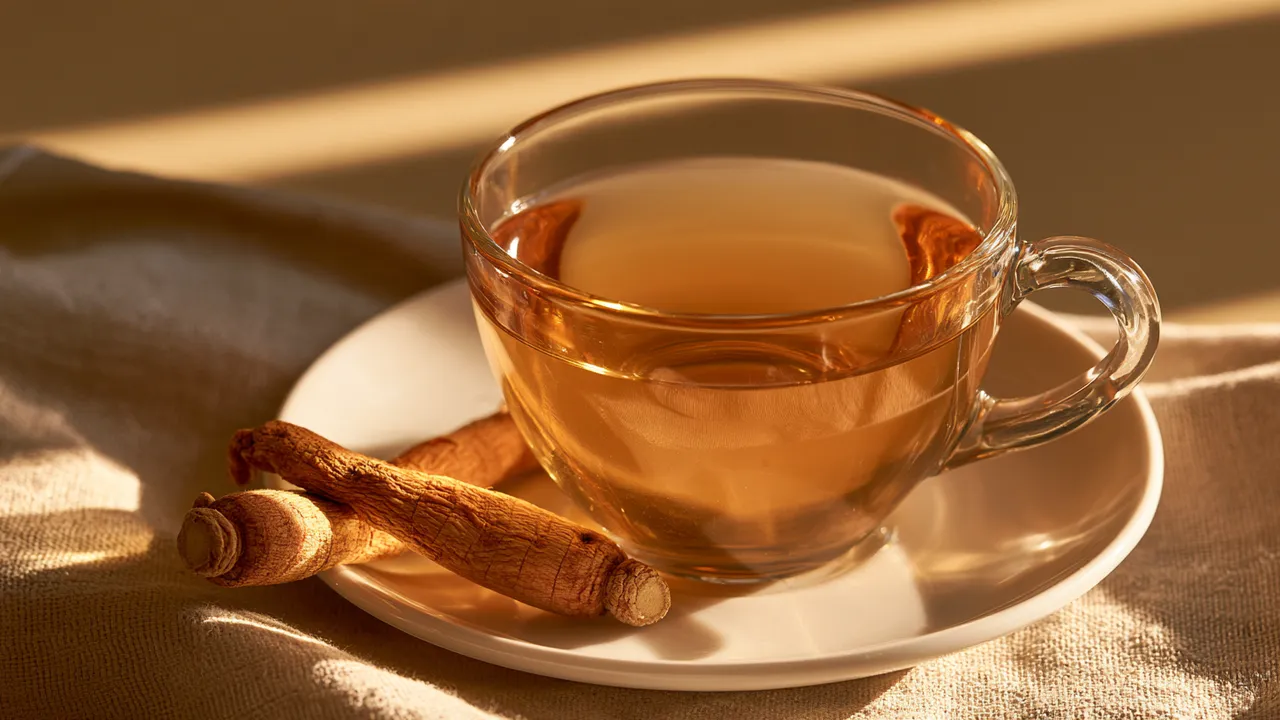
Ginseng Tea: History and Uses
Despite its name, ginseng tea contains no tea leaves. It is an herbal infusion made by steeping or simmering the root of the ginseng plant in hot water, so it is caffeine-free unless it is blended with true tea. Ginseng root has been used in East Asian traditional medicine for roughly two thousand years, and ginseng tea remains an everyday drink in Korea and China today.
This article is for informational purposes only and is not medical advice. Talk to your doctor or pharmacist before using ginseng, especially if you are pregnant, take medication, or have a health condition.
Table of Contents
What Is Ginseng Tea?
Ginseng tea is any hot drink made from the root of a true ginseng plant—a member of the genus Panax in the ivy family (Araliaceae). Because it is brewed from a root rather than from the leaves of the tea plant (Camellia sinensis), it belongs to the same category as other herbal teas, sometimes called tisanes.
It comes in several forms: thin slices of dried root steeped or simmered in water, finely ground root powder, and instant granules dissolved in hot water. Instant versions, especially common in Korea, are often sweetened with honey or sugar and may contain only a small amount of actual ginseng.
The roots contain compounds called ginsenosides (also known as panaxosides), which are the main focus of scientific research on the plant. The amount and mix of ginsenosides varies by species, root age, growing conditions, and processing.
Asian vs. American Ginseng
Two species account for most ginseng tea:
- Asian ginseng (Panax ginseng): Native to the mountains of Korea, northeastern China, and far-eastern Russia. Often sold as Korean ginseng. In traditional Chinese medicine it is considered warming and stimulating.
- American ginseng (Panax quinquefolius): Native to the hardwood forests of eastern North America, from southern Canada through the Appalachians. Traditional Chinese medicine regards it as cooling and milder than Asian ginseng, and it is especially prized in southern China and Hong Kong.
The two species have different ginsenoside profiles, so research on one does not automatically apply to the other. For more on each, see our guides to Korean ginseng and American ginseng.
Red vs. White Ginseng
“Red” and “white” do not refer to different plants. They describe how the same root is processed:
- White ginseng is peeled (or left unpeeled) and simply air- or sun-dried, leaving a pale root.
- Red ginseng is steamed before drying, which turns the root a reddish-amber color, changes its ginsenoside makeup, and lets it keep for much longer. Korean red ginseng is the best-known example.
“Siberian Ginseng” Is Not True Ginseng
“Siberian ginseng” is Eleutherococcus senticosus, a related shrub in the same plant family but not a Panax species. It contains different active compounds (eleutherosides rather than ginsenosides). Teas sold as Siberian ginseng are not the same drink as true ginseng tea, and US labeling rules no longer allow it to be sold simply as “ginseng.”
History of Ginseng Tea
Ginseng in Ancient China
Ginseng appears in the Shennong Bencao Jing (Divine Farmer’s Materia Medica), a classic Chinese herbal text compiled around two thousand years ago, where it is ranked among the superior herbs thought to be safe for long-term use and to support overall vitality. Its Chinese name, rénshēn (人参), means roughly “man root,” a reference to the forked roots that can resemble a human figure. The English word “ginseng” comes from a southern Chinese pronunciation of the same name.
Wild ginseng from the mountains of Manchuria and Korea was so valued that it was controlled by imperial monopolies and sent as tribute to the Chinese court. Overharvesting made wild roots increasingly scarce, which pushed prices higher and eventually encouraged cultivation.
The genus name Panax, given by European botanists, comes from the Greek panakeia, meaning “all-healing”—the same root as the word “panacea.”
Ginseng Tea in Korea
Korea has been one of the world’s most important ginseng producers for centuries. During the Goryeo and Joseon dynasties, Korean ginseng was a major diplomatic gift and trade good, and the Joseon state tightly regulated its cultivation and export. The town of Gaeseong became famous for red ginseng processing.
Ginseng tea, called insam-cha (인삼차) in Korean, is still a common everyday drink there. It is traditionally made by simmering sliced root, often with jujubes (Korean dates) and sweetened with honey, and instant ginseng tea granules are a staple in Korean households and offices. Ginseng also appears in Korean food, most famously in samgyetang, a whole young chicken stuffed with rice, jujubes, garlic, and a ginseng root and served as a summer tonic soup. Read more in our guide to Korean ginseng.
American Ginseng and the China Trade
In the early 1700s, a Jesuit missionary in China, Pierre Jartoux, published a description of Asian ginseng. Reading it in Canada, another Jesuit, Joseph-François Lafitau, reasoned that a similar plant might grow in North America’s similar forests, and in 1716, with help from Mohawk guides near Montreal, he found American ginseng.
A lucrative export trade to China followed. Wild American ginseng was dug throughout the Appalachians and shipped east, and the Empress of China, the first American merchant ship to sail to China in 1784, carried a large cargo of it. Frontiersman Daniel Boone was among the many Americans who traded in the root.
Heavy wild harvesting depleted American ginseng over the following centuries. Today most American ginseng is cultivated, much of it in Wisconsin and Ontario, while wild ginseng is protected under international trade rules. See our American ginseng guide for more.
Traditional and Modern Uses
In traditional Chinese and Korean medicine, ginseng root has been used as a tonic to restore energy, support recovery from illness, improve stamina, calm the mind, and support longevity. It is often described as an adaptogen, a term for herbs believed to help the body resist physical and mental stress. For more on that idea, see our guide to adaptogenic herbs.
Today, people drink ginseng tea mainly as a warm, earthy, slightly bitter caffeine-free drink, and as a traditional tonic for energy and focus.
What the Research Says
Most ginseng research uses standardized root extracts in capsules, not tea, so results from these studies may not apply to a cup of ginseng tea, which can contain a much smaller or more variable amount of the active compounds.
- Mental performance and fatigue: Some small trials of Asian ginseng extracts have reported short-term improvements in attention, memory, or fatigue, but results are inconsistent and the US National Center for Complementary and Integrative Health (NCCIH) considers the evidence insufficient to draw firm conclusions.
- Blood sugar: Both Asian and American ginseng have shown modest effects on blood sugar in some studies, which is also why they can interact with diabetes medications.
- Colds and respiratory infections: Some studies of a specific American ginseng extract suggested it might reduce how often adults catch colds, but the evidence is limited.
- Erectile function: Some trials of Korean red ginseng extracts have reported improvements, though study quality varies.
For most other claimed benefits, there is not enough reliable research in people. Ginseng tea should not be used in place of medical treatment for any condition.
Side Effects and Safety
According to NCCIH, short-term use of Asian ginseng by mouth—up to about six months—appears to be safe for most healthy adults, but its long-term safety is not well established.
The most commonly reported side effect is trouble sleeping. Others include headaches and digestive upset. Less commonly, ginseng has been linked to severe rash, liver damage, and serious allergic reactions. Because ginseng can be mildly stimulating, avoid drinking it late in the day if it affects your sleep.
Who Should Not Use Ginseng
- Pregnant women: A compound in Asian ginseng caused birth defects in animal studies, and some studies suggest it may be unsafe during pregnancy. Pregnant women should not use ginseng.
- Breastfeeding women: Little is known about its safety while breastfeeding, so it is best avoided.
- Infants and children: Experts recommend against giving ginseng to infants and children.
- People with autoimmune conditions: Ginseng may stimulate the immune system and worsen symptoms. It is not recommended for people with autoimmune diseases unless their doctor specifically approves.
- People with bleeding disorders or upcoming surgery: Ginseng may interfere with blood clotting. Tell your surgeon you use it and ask when to stop before a procedure.
- People with diabetes: Because ginseng may lower blood sugar, people with diabetes should not use it unless their doctor specifically approves.
Drug Interactions
Ginseng may interact with several kinds of medication:
- Warfarin and other blood thinners: In a controlled trial in healthy adults, American ginseng reduced warfarin’s blood-thinning effect. Ginseng may also affect clotting on its own.
- Diabetes medications: Combining ginseng with insulin or other glucose-lowering drugs may push blood sugar too low.
- Certain antidepressants: Case reports describe reactions, including mania and agitation, when ginseng was combined with MAO inhibitors such as phenelzine.
- Stimulants: Ginseng may add to the effects of caffeine and other stimulants.
Check with your doctor or pharmacist before drinking ginseng tea if you take any prescription medication.
How Ginseng Tea Is Made
Traditionally, ginseng tea is made by steeping or gently simmering thin slices of dried root in hot water, often sweetened with honey and, in Korea, simmered with jujubes. The same slices are commonly re-steeped several times. Instant ginseng granules are simply stirred into hot water, though many are mostly sugar or honey. For step-by-step instructions, see how to make ginseng tea.
There is no established recommended amount of ginseng tea. If you take medication or have a health condition, read the safety section above and ask your doctor or pharmacist before drinking it regularly.
Buying Ginseng Responsibly
- Know the species: Labels should state Panax ginseng (Asian/Korean) or Panax quinquefolius (American). Products labeled only “Siberian ginseng” are a different plant.
- Check the processing: Look for “red” or “white” ginseng and the root’s origin. Higher-grade roots are often sold by age, with older roots (commonly four to six years) commanding higher prices.
- Look for third-party testing: Ginseng products, especially powders and extracts, have been found adulterated or mislabeled. Seals from USP, NSF, or ConsumerLab can help confirm what’s inside.
- Avoid wild-harvested American ginseng: Wild American ginseng is listed under CITES Appendix II, and its harvest and export are regulated. Choose cultivated or woods-grown roots from reputable sellers to avoid putting more pressure on wild populations.
Ginseng Tea FAQ
Does ginseng tea contain tea leaves or caffeine? No. Ginseng tea is an herbal infusion made from ginseng root, not from the tea plant, so it is naturally caffeine-free. Some commercial blends mix ginseng with green or black tea, which do contain caffeine.
What does ginseng tea taste like? Earthy and slightly bitter, with a faint sweetness. Red ginseng tends to taste deeper and more bitter than white ginseng.
Is Korean ginseng tea the same as regular ginseng tea? Korean ginseng tea (insam-cha) is usually made from Asian ginseng, often red ginseng, and is commonly sweetened with honey or simmered with jujubes. Ginseng tea elsewhere may use American ginseng.
Can you drink ginseng tea every day? Short-term use appears safe for most healthy adults, but long-term safety isn’t well established, and ginseng interacts with several medications. Ask your doctor or pharmacist if you plan to drink it regularly.
Can I drink ginseng tea while pregnant or breastfeeding? No. Ginseng is advised against during pregnancy, and there isn’t enough safety information for breastfeeding.
Is ginseng tea good before bed? It can cause trouble sleeping in some people, so many drink it earlier in the day.
References
- National Center for Complementary and Integrative Health. Asian Ginseng.
- Yuan CS, et al. American ginseng reduces warfarin’s effect in healthy patients: a randomized, controlled trial. Annals of Internal Medicine. 2004.
- Seely D, et al. Safety and efficacy of Panax ginseng during pregnancy and lactation. Canadian Journal of Clinical Pharmacology. 2008.
- MedlinePlus. Asian Ginseng.
Matthew Atkins
Matthew studied biology and has worked in conservation. He's been interested in medicinal herbs for many years. More about HerbsList
This page is for general information only and isn't medical advice. Talk with a doctor or pharmacist before taking any herb or supplement. Full disclaimer