Rhodiola Rosea: Does It Work? Benefits, Risks and Dosage
 By Matthew Atkins ·
The Short Version
- What it is: the root of a small yellow-flowered plant from the Arctic and high mountains, sold as a supplement for stress and tiredness. You’ll also see it called golden root, roseroot or arctic root.
- Does it work? The honest answer is that nobody knows yet. The studies are small and disagree with each other. Some found people felt less worn out; others found no difference; one found people taking rhodiola felt more tired than those on a dummy pill. The US government’s center for complementary health research (NCCIH) says there isn’t enough reliable evidence to say it helps with anything.
- It is not a depression treatment. In the best-known trial, people on rhodiola, people on the antidepressant sertraline (Zoloft) and people on a dummy pill all ended up in about the same place (Mao et al. 2015).
- The main risk is mixing it with medicines. Be careful if you take an antidepressant, the blood thinner warfarin, or the seizure drug phenytoin (Dilantin). Ask a pharmacist first.
- Unknowns: safety has only been studied for up to 12 weeks, and nobody knows whether it’s safe in pregnancy.
- Buying tip: a lot of rhodiola sold as raw material turns out to be a different species. Look for “Rhodiola rosea” on the label and a stated rosavin percentage (more on that below).
Table of Contents
What Is Rhodiola?
The plant
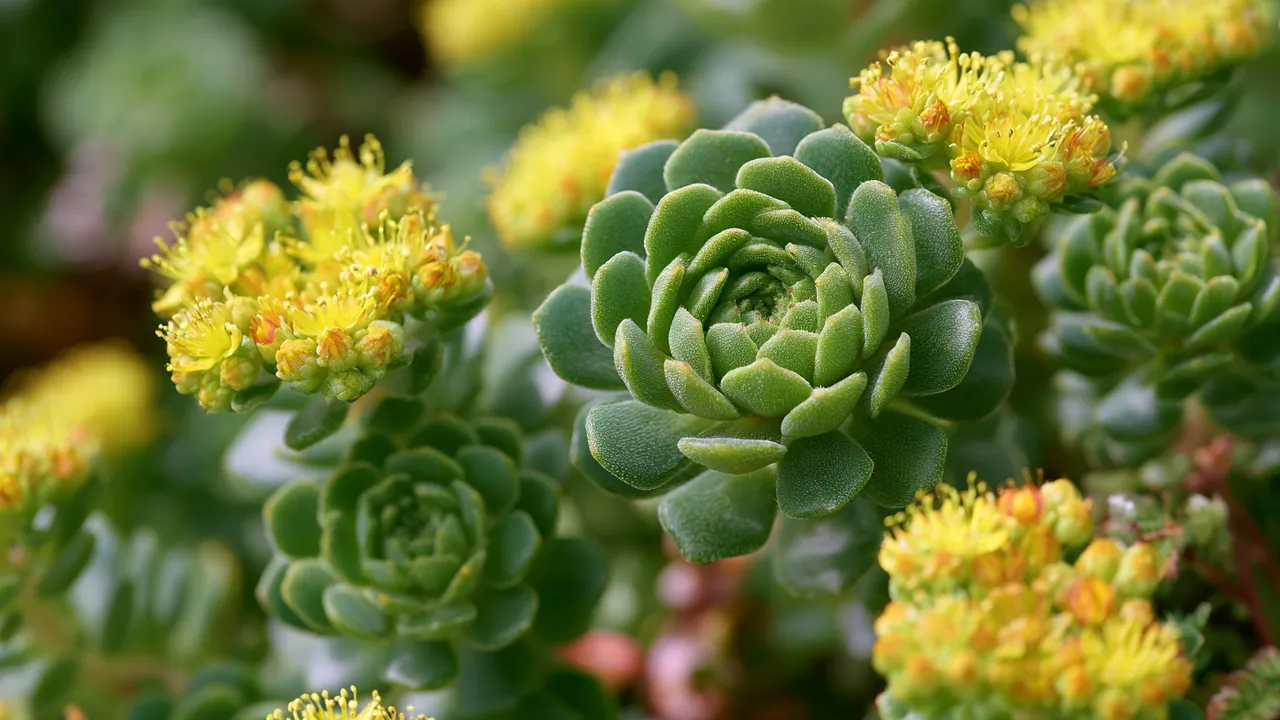
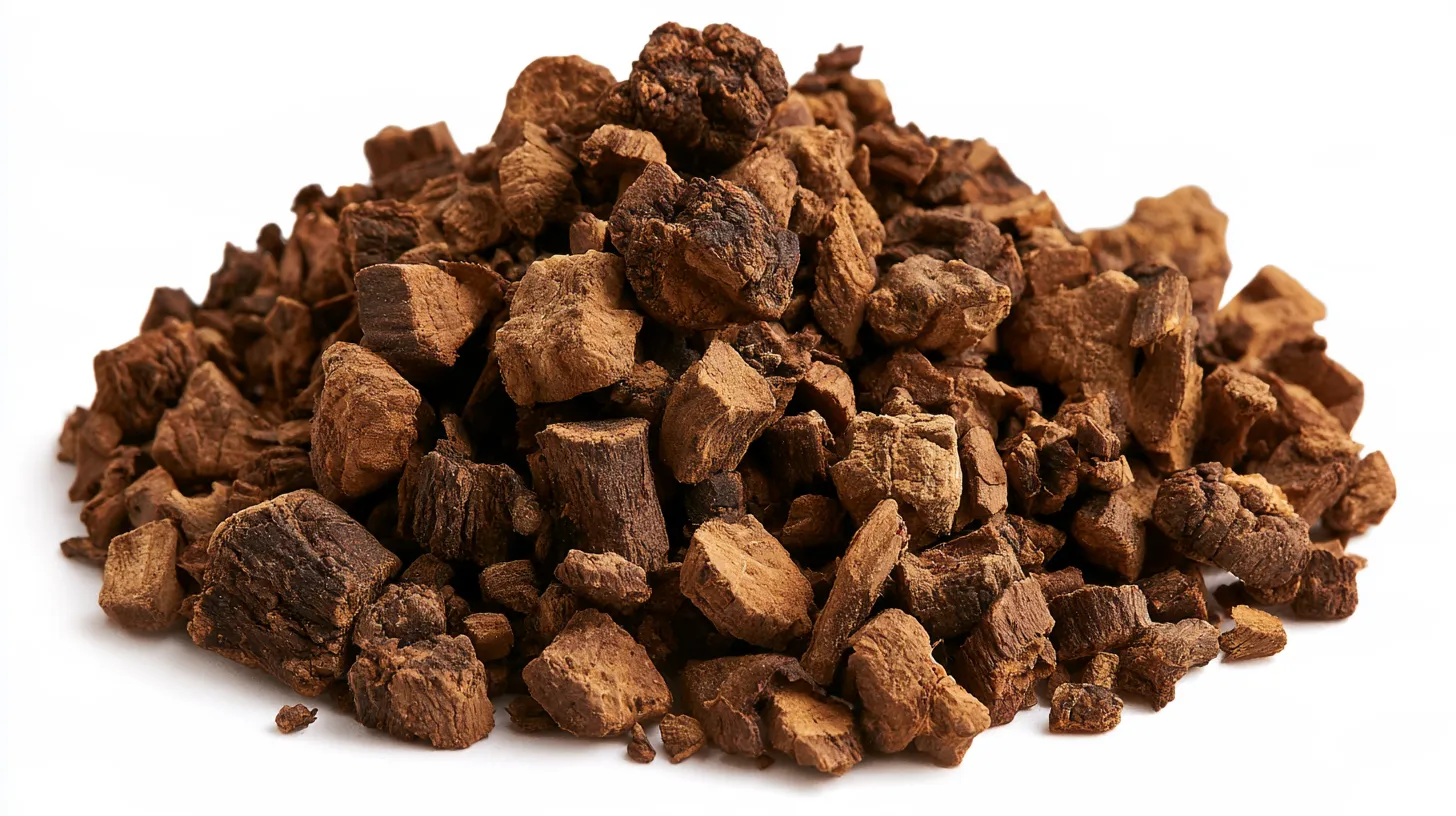
Rhodiola rosea is a hardy perennial with a thick, fleshy root and clusters of small yellow flowers. It grows in cold, rocky places: the Arctic, mountains in Europe and Asia, and parts of North America (Drugs.com; NCCIH). It belongs to the stonecrop family, the same group as sedums. The part used in supplements is the root and the underground stem (rhizome).
There are somewhere between 58 and 90 Rhodiola species, depending on who’s counting, and some take 20 years to mature in the wild (CITES). That slow growth matters, because most rhodiola on the market is still harvested from the wild.
How it was used traditionally
People in Russia, Scandinavia and elsewhere in Europe have used rhodiola for a long time to fight fatigue, boost endurance and work capacity, lift low mood and cope with altitude sickness (NCCIH). Its first written mention as a medicine goes back to the ancient Greek physician Dioscorides. Serious lab research started in the Soviet Union and Scandinavia in the 1960s (Booker et al. 2016).
What “rosavins” and “salidroside” on the label mean
Supplement labels often list two kinds of compounds:
- Rosavins (rosavin, rosin and rosarin) are the fingerprint of Rhodiola rosea. They’re found mainly in this species, plus one close relative that some botanists consider the same plant (Booker et al. 2016; Drugs.com).
- Salidroside is found in Rhodiola rosea but also in Rhodiola crenulata, the cheaper species most often swapped in for it (Booker et al. 2016).
So a label that only lists salidroside doesn’t tell you which plant you’re getting. Rosavin content is the more useful number. The extract used in most studies contained at least 3% rosavins and about 1% salidroside (Drugs.com).

What the Research Shows
Most rhodiola studies are small, many were short, and several used one company’s extract. The US National Institutes of Health rates most of the human research as low to moderate quality (NCCIH). European regulators allow rhodiola to be sold for stress-related tiredness, but only as a “traditional” remedy, based on its long history of use rather than on proof from trials (EMA).
Here’s what’s been tested, goal by goal:
| Goal | What studies found | How much to trust it |
|---|---|---|
| Less physical or mental tiredness | Mixed. In a review of 11 trials, about half found a benefit (Ishaque 2012). One later trial found people felt more tired on rhodiola (Punja 2014) | Low. The trials had design flaws |
| Burnout from stress | One trial of 60 people found modest improvement over a dummy pill after 4 weeks (Olsson 2009) | Low. One small trial |
| Depression | No clear difference from a dummy pill in the best-known trial (Mao 2015); an earlier trial was positive | Low and conflicting |
| Exercise endurance | One small trial was positive; most recent trials found no effect (Drugs.com) | Mixed |
| Focus and memory | A few older, small trials in night-shift doctors and students at exam time (MSKCC) | Very early |
| Anxiety | One small pilot study (MSKCC) | Very early |
| Cancer, living longer | Lab, fruit-fly and animal studies only (Drugs.com) | No reliable human evidence |
Tiredness and stress
This is what rhodiola is mostly sold for, and the results point in both directions.
A 2012 review pulled together 11 trials. Rhodiola helped in 2 of 6 trials on physical tiredness and 3 of 5 on mental tiredness, but every trial had weaknesses that made the results hard to trust. The reviewers called the research “contradictory” (Ishaque et al. 2012).
Two trials show the split:
- The positive one. Sixty adults with stress-related exhaustion took 576 mg a day of a standardized extract called SHR-5, or a dummy pill, for four weeks. Both groups improved, which the researchers put down partly to the placebo effect. But the rhodiola group did somewhat better on a burnout questionnaire and some attention tests (Olsson et al. 2009). One of the three authors, Alexander Panossian, was later thanked in another trial as working for the Swedish Herbal Institute, the company that supplied that trial’s extract. That trial says the company had no role in running or reporting it (Mao et al. 2015).
- The negative one. Forty-eight nursing students working shifts took 364 mg a day of rhodiola or a dummy pill for six weeks. The dummy-pill group did better on both tiredness measures. The authors concluded rhodiola made fatigue worse, while warning that a single small trial should be read with caution (Punja et al. 2014).
We cover other herbs people use for stress and fatigue on a separate page.
Depression
Rhodiola is often described online as a natural antidepressant. The best trial doesn’t support that.
Researchers at the University of Pennsylvania gave 57 people with mild to moderate depression either rhodiola, sertraline (Zoloft) or a dummy pill for 12 weeks (Mao et al. 2015). All three groups improved a little, and the differences between them were too small to count as real. On a standard depression score, people improved by about 8 points on sertraline, 5 on rhodiola and 4.6 on the dummy pill.
Where rhodiola did look better was side effects: 30% of people on rhodiola reported one, against 63% on sertraline (and 17% on the dummy pill). The authors suggested rhodiola might offer a better balance of benefit and side effects than sertraline, while being less effective. They also said the trial was a small first test, designed to plan a bigger study rather than to settle the question (full text).
An earlier six-week trial of the same extract in 89 people did report a benefit over a dummy pill; Panossian was one of its authors (Drugs.com).
Expert guidelines don’t agree on where that leaves rhodiola. A 2022 international taskforce on supplements for mental health said rhodiola is not currently recommended for depression (Sarris et al. 2022). Canada’s 2023 depression guidelines list it as a third-line option for mild depression only, noting the benefit is modest and the trials have major limits (Lam et al. 2024).
If you think you might be depressed, rhodiola is not a substitute for proper care. Depression can be a serious illness, and a doctor or therapist can help.
Exercise
In one small trial of 15 people, a single dose taken an hour before cycling helped them finish a time trial a little faster. But most recent trials found rhodiola made no difference to how long people could exercise, or to muscle damage and soreness (Drugs.com).
Focus and memory
Memorial Sloan Kettering Cancer Center calls the evidence here “preliminary” (MSKCC). It comes from a few older, small trials, including one in doctors working night shifts and others in students during exams (Drugs.com).
Cancer and anti-aging claims
These claims come almost entirely from lab dishes, fruit flies and rodents (MSKCC; Drugs.com). The only human cancer study is a tiny 1995 Russian report on 12 people. There’s no reliable evidence that rhodiola affects cancer or how long you live.
Safety, Side Effects and Drug Interactions
Side effects
Side effects reported so far are usually mild:
- dizziness
- dry mouth, or the opposite, extra saliva
- headache
- trouble sleeping
- less often: nausea, stomach pain, diarrhea, rash or itching
In the depression trial, 6 of 20 people on rhodiola reported a side effect; the only ones that came up more than once were dizziness and nervousness (Mao et al. 2015).
NCCIH describes rhodiola as possibly safe for up to 12 weeks. As of October 2026, we found no trial lasting longer than that, so long-term safety is simply unknown.
Liver. The NIH’s database of supplements and drugs that harm the liver (LiverTox) doesn’t currently have an entry for rhodiola (LiverTox). That’s not the same as proof it’s safe for the liver; it just hasn’t been studied as a cause. Rhodiola does appear as one ingredient in some SLIMQUICK and Herbalife products linked to liver injury, but LiverTox points to other ingredients, such as green tea extract in SLIMQUICK, or says the cause hasn’t been identified (LiverTox: SLIMQUICK; LiverTox: Herbalife).
Medicines that may interact
This is the most important safety section on this page.
| Medicine | Why it might matter | How solid is the evidence? |
|---|---|---|
| Antidepressants (SSRIs and others) | One woman developed a fast, irregular heartbeat after taking rhodiola with her antidepressant for 3 days. Lab tests also suggest rhodiola may add to the effects of these drugs (MSKCC) | One case report plus lab studies |
| Warfarin (blood thinner) and phenytoin (seizure drug) | Rhodiola slightly slows the liver enzyme that clears these drugs, which could raise their levels. Both have a small margin between the right dose and too much (MSKCC) | One study in 13 healthy volunteers, which measured the enzyme but didn’t test warfarin or phenytoin themselves (Thu et al. 2016) |
| Losartan (blood pressure) | NCCIH says interactions have been reported (NCCIH) | The same 13-person study, plus animal data. We found no reports of real patients harmed |
| Other blood pressure medicines | Could, in theory, push blood pressure too low (MSKCC) | Theory only |
| Stimulants (such as ADHD medicines) | Could, in theory, raise blood pressure (MSKCC) | Theory only |
Experts read this evidence differently. EU regulators say no clinically important interactions have been seen (EMA), and Drugs.com doesn’t list anything people must avoid (Drugs.com). Memorial Sloan Kettering is more cautious and lists antidepressant use as a reason not to take it (MSKCC). The difference comes down to whether you only count harm that’s actually been seen in patients, or also count early warning signs. If you’re on warfarin, phenytoin or an antidepressant, the cautious view is the sensible one.
Pregnancy and breastfeeding
Not enough is known to say it’s safe (NCCIH). European regulators recommend against using it while pregnant or breastfeeding (EMA).
Who should check with a doctor or pharmacist first
- anyone taking an antidepressant
- anyone on warfarin, phenytoin or another drug with a narrow safe dose range
- anyone on blood pressure medicine (including losartan) or stimulants
- anyone pregnant or breastfeeding
- anyone under 18 (European regulators don’t recommend it for this age group)
- anyone with symptoms of depression
Are you getting real rhodiola?
The best study on this looked at raw rhodiola root bought in bulk, not finished capsules. Researchers tested 42 batches, bought in 2014–2015, from suppliers in China, Germany and Russia. Of the samples bought in China, 30% were actually a different Rhodiola species, and almost half of all samples weren’t labeled properly (Booker et al. 2016). That doesn’t mean 30% of supplements on US shelves are fake, but it shows why the label details below matter.
Rhodiola is also under pressure in the wild. Most of what’s traded is wild-harvested, and the plant is listed as threatened in several countries and four US states (CITES). In 2022, countries agreed to bring rhodiola under the CITES wildlife-trade treaty, which regulates international trade in raw material; finished retail products are exempt (CITES Appendices).
How Much Was Used in Studies
These are the amounts researchers gave people. They are not dosing advice.
- Most studies: 200–600 mg a day of a standardized extract (Drugs.com).
- Burnout trial: 576 mg a day for 4 weeks (Olsson et al. 2009).
- Depression trial: started at 340 mg a day and went up to as much as 1,360 mg a day for people who weren’t improving (Mao et al. 2015).
- Exercise trial: a single dose of 3 mg per kilogram of body weight, an hour before exercise (Drugs.com).
- EU-registered traditional products: 144–200 mg of a specific extract once or twice a day, up to 400 mg a day (EMA).
Examine, an independent supplement research site, suggests more isn’t better, and that doses above 680 mg may work less well (Examine). The depression trial went higher than that.
Many trials used SHR-5, an extract standardized to about 3% rosavins and 2% salidroside (Mao et al. 2015). Plain root powder and rhodiola tea aren’t the same thing as the extracts studied.
How long and when: trials ran from a single dose up to 12 weeks. The shift-work trial gave the capsule on waking (Punja et al. 2014), but none of the major references says what time of day is best. European regulators advise seeing a doctor if symptoms last more than two weeks.
How to Choose a Rhodiola Product
We don’t rank products on this page. Here’s what to check on any label:
- It says Rhodiola rosea, not just “rhodiola.” Rhodiola crenulata is a different plant from the one studied.
- It states rosavin content, not just salidroside. About 3% rosavins matches the studied extracts.
- It’s independently tested. Look for a USP Verified or NSF Certified for Sport seal, or a certificate of analysis that confirms the species.
- The brand can tell you where the root came from, and whether it was farmed or wild-harvested.
Rhodiola and Other Adaptogens
Rhodiola is usually grouped with ashwagandha, schisandra, Korean ginseng and cordyceps as an “adaptogen,” a herb said to help the body handle stress (what that term means). The label says more about how these herbs were used traditionally than about shared proof. Each has its own research and its own risks, and good results for one don’t carry over to another.
Rhodiola’s medicine interactions follow it wherever it shows up, including in multi-herb stress blends, so check blend labels too. For a side-by-side look, see Rhodiola vs Ashwagandha.
Questions People Ask
Can I take rhodiola every day? Trials have given it daily for up to 12 weeks, and NCCIH calls it possibly safe for that long. Nobody has studied longer use. European regulators advise seeing a doctor if your symptoms last more than two weeks.
What shouldn’t you mix with rhodiola? Mainly antidepressants, warfarin and phenytoin, and possibly losartan. Blood pressure medicines and stimulants are a theoretical concern. If you take any of these, ask your pharmacist first.
Is rhodiola safe during pregnancy? Nobody knows, and European regulators recommend against it during pregnancy and breastfeeding.
How long does rhodiola take to work? No study has pinned this down. Trials measured results anywhere from one hour after a single dose (for exercise) to four weeks (for burnout) to several weeks or more (for depression).
Sources
- National Center for Complementary and Integrative Health (NCCIH). Rhodiola: Usefulness and Safety. Last updated April 2025. https://www.nccih.nih.gov/health/rhodiola
- Memorial Sloan Kettering Cancer Center. About Herbs: Rhodiola. Accessed 31 October 2026. https://www.mskcc.org/cancer-care/integrative-medicine/herbs/rhodiola
- Drugs.com. Rhodiola Rosea (natural product monograph). Last updated 13 July 2026. https://www.drugs.com/npp/rhodiola.html
- EMA Committee on Herbal Medicinal Products. European Union herbal monograph on Rhodiola rosea L., rhizoma et radix, Revision 1. EMA/HMPC/24177/2023, 20 March 2024. https://www.ema.europa.eu/en/documents/herbal-monograph/final-european-union-herbal-monograph-rhodiola-rosea-l-rhizoma-et-radix-revision-1_en.pdf
- Mao JJ, Xie SX, Zee J, et al. Rhodiola rosea versus sertraline for major depressive disorder: a randomized placebo-controlled trial. Phytomedicine. 2015;22(3):394–399. https://pubmed.ncbi.nlm.nih.gov/25837277/
- Mao JJ et al. 2015, full text (PMC4385215). https://pmc.ncbi.nlm.nih.gov/articles/PMC4385215/
- Ishaque S, Shamseer L, Bukutu C, Vohra S. Rhodiola rosea for physical and mental fatigue: a systematic review. BMC Complement Altern Med. 2012;12:70. https://pubmed.ncbi.nlm.nih.gov/22643043/
- Olsson EM, von Schéele B, Panossian AG. A randomised, double-blind, placebo-controlled, parallel-group study of the standardised extract SHR-5 of the roots of Rhodiola rosea in the treatment of subjects with stress-related fatigue. Planta Med. 2009;75(2):105–112. https://pubmed.ncbi.nlm.nih.gov/19016404/
- Booker A, Zhai L, Gkouva C, Li S, Heinrich M. From traditional resource to global commodities: a comparison of Rhodiola species using NMR spectroscopy-metabolomics and HPTLC. Front Pharmacol. 2016;7:254. https://pmc.ncbi.nlm.nih.gov/articles/PMC5002433/
- CITES. CoP19 Prop. 45: proposal to include Rhodiola spp. in Appendix II. 2022. https://cites.org/sites/default/files/documents/E-CoP19-Prop-45.pdf
- CITES. CoP19 Com. I Rec. 14 (Rev. 1): summary record, 22 November 2022. https://cites.org/sites/default/files/documents/E-CoP19-Com-I-Rec-14-R1.pdf
- CITES. Appendices I, II and III, valid from 5 March 2026. https://cites.org/eng/app/appendices.php
- Examine. Rhodiola rosea. Last updated December 2025. https://examine.com/supplements/rhodiola-rosea/
- LiverTox: Clinical and Research Information on Drug-Induced Liver Injury [Internet]. Bethesda (MD): National Institute of Diabetes and Digestive and Kidney Diseases; 2012-. Herbal and Dietary Supplements. [Updated 2025 Jul 1]. Accessed 31 October 2026. https://www.ncbi.nlm.nih.gov/books/NBK548441/
- Punja S, Shamseer L, Olson K, Vohra S. Rhodiola rosea for mental and physical fatigue in nursing students: a randomized controlled trial. PLoS One. 2014;9(9):e108416. https://pubmed.ncbi.nlm.nih.gov/25268730/
- Thu OK, Spigset O, Nilsen OG, Hellum B. Effect of commercial Rhodiola rosea on CYP enzyme activity in humans. Eur J Clin Pharmacol. 2016;72(3):295–300. https://pubmed.ncbi.nlm.nih.gov/26613955/
- Sarris J, Ravindran A, Yatham LN, et al. Clinician guidelines for the treatment of psychiatric disorders with nutraceuticals and phytoceuticals: The World Federation of Societies of Biological Psychiatry (WFSBP) and Canadian Network for Mood and Anxiety Treatments (CANMAT) Taskforce. World J Biol Psychiatry. 2022;23(6):424–455. https://pubmed.ncbi.nlm.nih.gov/35311615/
- LiverTox: Clinical and Research Information on Drug-Induced Liver Injury [Internet]. Bethesda (MD): National Institute of Diabetes and Digestive and Kidney Diseases; 2012-. Slimquick. [Updated 2021 Sep 3]. Accessed 31 October 2026. https://www.ncbi.nlm.nih.gov/books/NBK548570/
- LiverTox: Clinical and Research Information on Drug-Induced Liver Injury [Internet]. Bethesda (MD): National Institute of Diabetes and Digestive and Kidney Diseases; 2012-. Herbalife. [Updated 2018 Apr 11]. Accessed 31 October 2026. https://www.ncbi.nlm.nih.gov/books/NBK548447/
- Lam RW, Kennedy SH, Adams C, et al. Canadian Network for Mood and Anxiety Treatments (CANMAT) 2023 Update on Clinical Guidelines for Management of Major Depressive Disorder in Adults. Can J Psychiatry. 2024;69(9):641–687. doi:10.1177/07067437241245384. Erratum in: Can J Psychiatry. 2025;70(8):652. PMID: 38711351; PMCID: PMC11351064. https://pmc.ncbi.nlm.nih.gov/articles/PMC11351064/
Matthew Atkins
Matthew studied biology and has worked in conservation. He's been interested in medicinal herbs for many years. More about HerbsList
This page is for general information only and isn't medical advice. Talk with a doctor or pharmacist before taking any herb or supplement. Full disclaimer